Define the analytical result
State the analyte, reporting units, normal and upset ranges, and reference method.


Controlled reagent addition and endpoint detection for defined water and process chemistry.
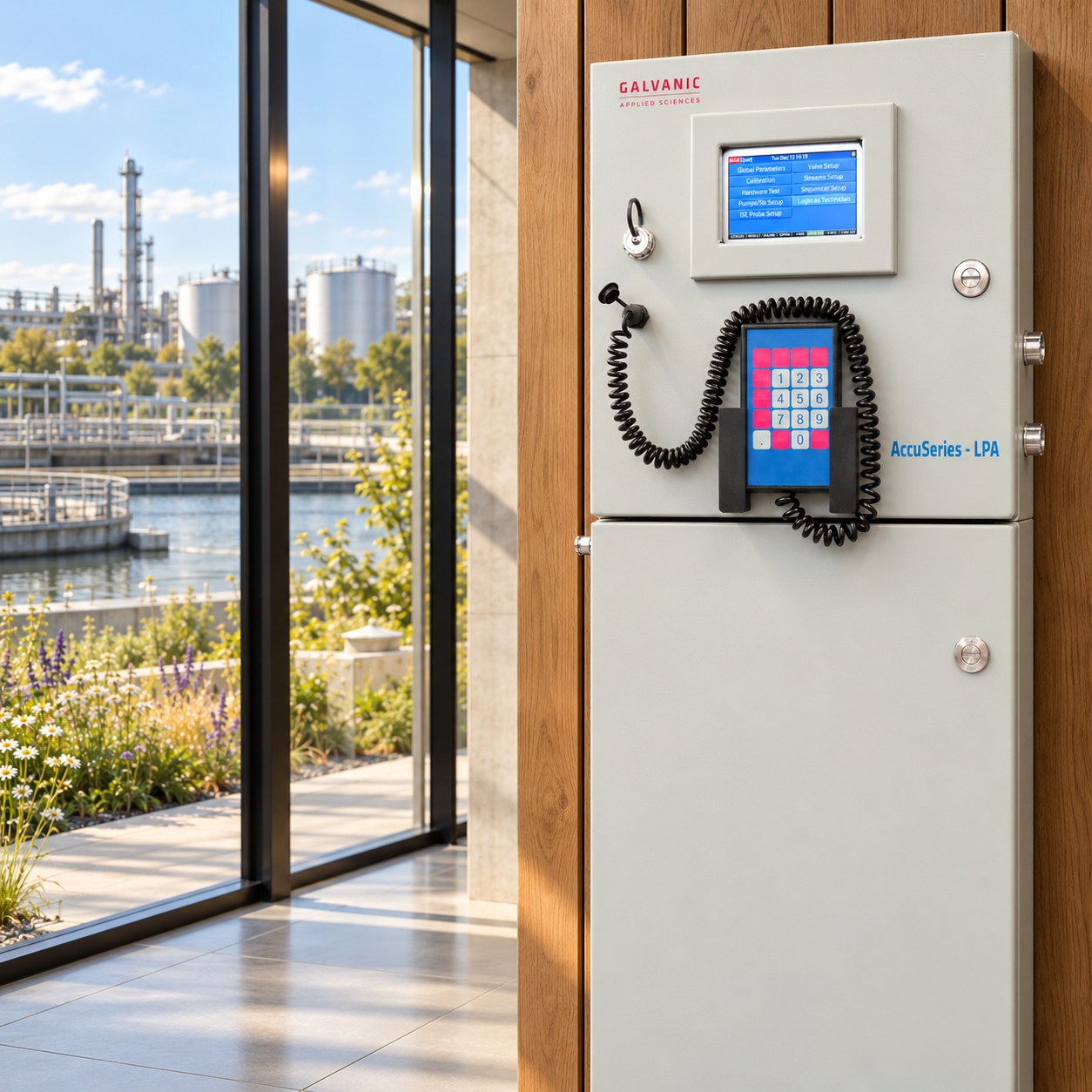
Titration determines a result from the measured addition of a standard solution to a representative sample. AccuSeries can automate optical colour titration or potentiometric titration with an endpoint suited to the method and sample.
Define the result as a named analyte or titratable quantity. Free, total and other reporting bases can represent different operating decisions, even where the same process sample is used.
State the analyte, reporting units, normal and upset ranges, and reference method.
Review optical colour change or electrode response with the sample matrix, titrant and endpoint.
Agree sample volume, dilution, titrant checks, calibration, cleaning and comparison samples.
Review a named acid, concentration range and neutralisation method for process control.
Define the alkalinity basis and endpoint, or the appropriate hardness chemistry and units.
Review direct caustic measurement alongside other constituents affecting the titration.
The selected chemistry, range and preparation must represent the actual sample. Online process information supports the agreed operating decision and verification plan.
Share the analyte and chemical form, reporting units, normal and upset range, sample composition, colour and solids, temperature, transport conditions, reference method, required result frequency, number of streams and outputs. Include maintenance access, reagent replenishment and waste handling.
PMA has supported process measurement and analysis since 1971. We connect your analytical objective with the sample, instrument, installation and operating team.
Talk to us about application review, commissioning, training, service and ongoing reagent supply.
Read the public PMA brochure for the platform, measurement methods, configuration overview and UK support.
Continue with detailed technical and application guidance on our dedicated AccuSeries website.
Search PMA’s parameter, product and application finder using your analyte, method or operating duty.
No. pH describes an electrode response at the sample conditions. A titration uses a defined reagent addition and endpoint to determine a specified titratable result.
Optical colour change or potentiometric electrode response can be configured where appropriate. The endpoint and calculation must match the analytical method.
Define the caustic reporting basis, range, sample composition and interfering constituents. Confirm the titrant, endpoint and comparison method rather than relying on pH alone.
Compare the platform, industries, technical overview and public application notes.
Automate a defined colour-development reaction for nutrients, selected metals and other compatible water and process chemistries.
Match the electrode, sample conditioning and calibration to the target ion and required reporting basis.
Review whether one platform can serve several sample points and analytical duties with a suitable measurement sequence.
Speak to the PMA team about your instruments, reagents or service requirements. Tell us what you need, and we’ll help you find the right next step.
Trusted by our clients


Share your requirements below. All fields are required.
Your enquiry goes directly to our team. Your details are used to respond to you, and you won’t be added to a marketing database. Read our privacy policy.
To find out more about our range of sensors, request a callback or ask a technical question, our expert staff are always on hand. Our focus has always been to deliver world-class customer service.
Get startedWe use optional Google Analytics cookies to understand which pages are useful. Analytics stays off unless you accept. Read our privacy statement.