Compass CPR
- Chemical phosphorus-removal control
- Continuous influent characterisation
- Phosphorus and non-phosphorus demand reviewed
- Site-specific dose output


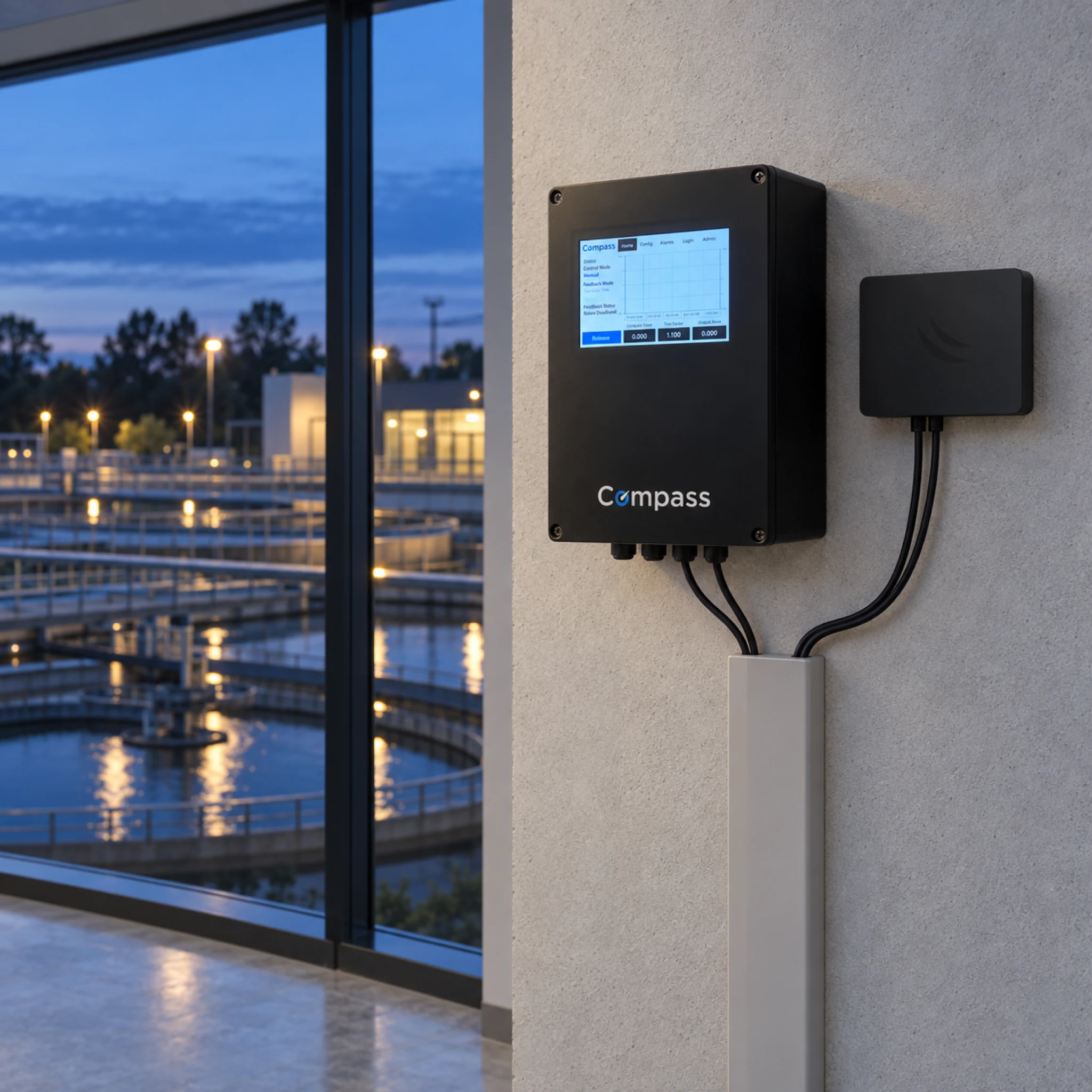
Compass CPR and Compass CEP use continuous influent measurements and site-specific models to calculate coagulant demand for wastewater treatment.
Feed-forward control
Wastewater coagulant demand is influenced by more than one variable. Phosphorus concentration, suspended solids, organic loading and process conditions can all affect the dose required to achieve the agreed treatment objective.
Compass uses continuous influent measurements with a site-specific control model to calculate a feed-forward coagulant-demand output. Compass CPR is intended for chemical phosphorus removal. Compass CEP supports chemically enhanced pre-treatment ahead of primary clarification.
Compass can support an agreed control objective, but final performance depends on the plant, influent, chemistry, equipment and operating conditions. It should not be represented as a universal discharge guarantee.
The wastewater configurations combine continuous influent measurement, application-specific modelling and a controlled dose output. Exact sensor, phosphorus-input and integration requirements are confirmed for the proposed works.
 Technical resources
Request the current Compass information and discuss the influent measurements, phosphorus data, treatment objective, coagulant, dose range and control interface with PMA.
The configured model must distinguish the required chemical treatment objective from other influent demand and plant constraints.
Online instruments continuously characterise the incoming wastewater using the measurements agreed for the application.
The model evaluates the measured wastewater characteristics and the relevant phosphorus or pre-treatment objective.
Compass calculates a coagulant-demand output within the configured dose range and operating limits.
The output is integrated with the dosing philosophy and performance is checked against the agreed downstream evidence.
The two wastewater configurations address different treatment stages. They should not be treated as interchangeable product labels.
Compass CPR is configured to calculate coagulant demand for phosphorus removal while accounting for the non-phosphorus demand indicated by the influent measurements.
Compass CEP supports coagulant dosing ahead of primary clarification to meet an agreed primary-effluent or downstream-loading objective.
Any benefit must be assessed and validated for the individual wastewater treatment works. Historic performance and saving figures remain source- and site-specific.
Continuous influent measurement can identify variation that a fixed ratio or delayed downstream response may not capture quickly.
Compass CPR is intended to distinguish the phosphorus-related requirement from other measured coagulant demand.
Compass CEP supports a separate chemically enhanced primary-treatment objective where upstream dosing is used to manage downstream loading.
Define the treatment objective, current process and available evidence before selecting CPR or CEP and designing the control interface.
Expected variability, sampling point and available historic data.
Phosphorus removal, primary-effluent or downstream-loading target.
Coagulant, dose range, alkalinity and relevant process constraints.
Current phosphorus, solids, spectral and supporting measurements.
Dosing equipment, SCADA, operating modes, limits and alarms.
Baseline period, downstream evidence and acceptance method.
CPR and CEP selection begins with the treatment stage, available measurements and control objective.
Practical guidance for planning feed-forward coagulation control in wastewater treatment.
Compass CPR is the wastewater configuration for chemical phosphorus removal. The source material describes calculation of both phosphorus-related and non-phosphorus coagulant demand.
Compass CEP supports chemically enhanced pre-treatment ahead of primary clarification, using configured influent measurements to calculate dose demand for the agreed downstream objective.
The applicable phosphorus input or surrogate is site-specific. PMA must review the available measurements and current system generation before confirming the design.
No control system should be presented as a universal guarantee. Compliance depends on the full treatment process, equipment, chemistry, operation and validation evidence.
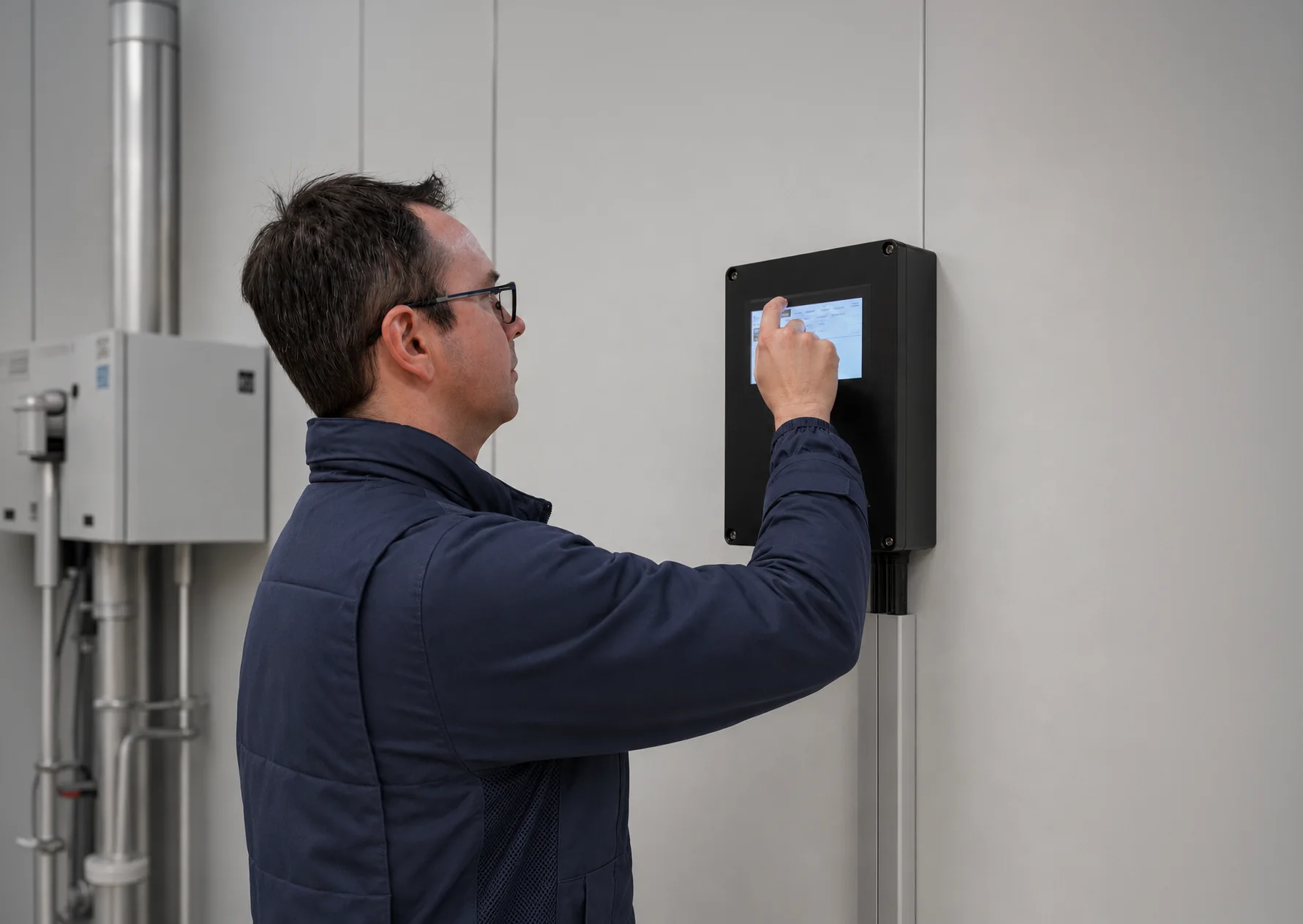
Existing pumps, control signals, SCADA, operating modes and dose limits are reviewed as part of the application and integration design.
Provide influent and downstream data, the treatment objective, coagulant information, dose history, available online measurements and control-system details.
Use these resources to understand the control principle, supporting evidence and drinking-water application, then ask PMA to review the requirements of your works.
Read the established explanation of the wastewater feed-forward control approach.

See how the Compass family supports turbidity control and enhanced organics removal.

Discuss the information PMA needs to assess CPR or CEP for a wastewater treatment works.

Distinguish phosphorus-removal control from chemically enhanced pre-treatment before the design is developed.
Review measurements, pumps, outputs, modes, limits, alarms and operator ownership.
Compare operation against the agreed baseline and downstream treatment evidence.
Speak to the PMA team about your instruments, reagents or service requirements. Tell us what you need, and we’ll help you find the right next step.
Trusted by our clients


Share your requirements below. All fields are required.
Your enquiry goes directly to our team. Your details are used to respond to you, and you won’t be added to a marketing database. Read our privacy policy.
To find out more about our range of sensors, request a callback or ask a technical question, our expert staff are always on hand. Our focus has always been to deliver world-class customer service.
Get startedWe use optional Google Analytics cookies to understand which pages are useful. Analytics stays off unless you accept. Read our privacy statement.