Record the source arrangement
Name the contributing boreholes or surface-water sources and any blending. Retain abstraction and source-switching events with the original measurements.


Give iron and manganese trends a source, filter and return-to-service record.
Iron and manganese measurements can support a review of source-water changes and removal through treatment. Define the raw-water, post-treatment and final-water points before comparing results. Identify which sources and units feed each point and whether an outlet represents one filter or a combined stream.
The 3S colourimeter offers iron and manganese methods for drinking-water duties. Select each configuration against the sample, concentration and measured fraction. Raw and treated water can place different demands on the method and sample system; matching the parameter label alone does not make the results equivalent.
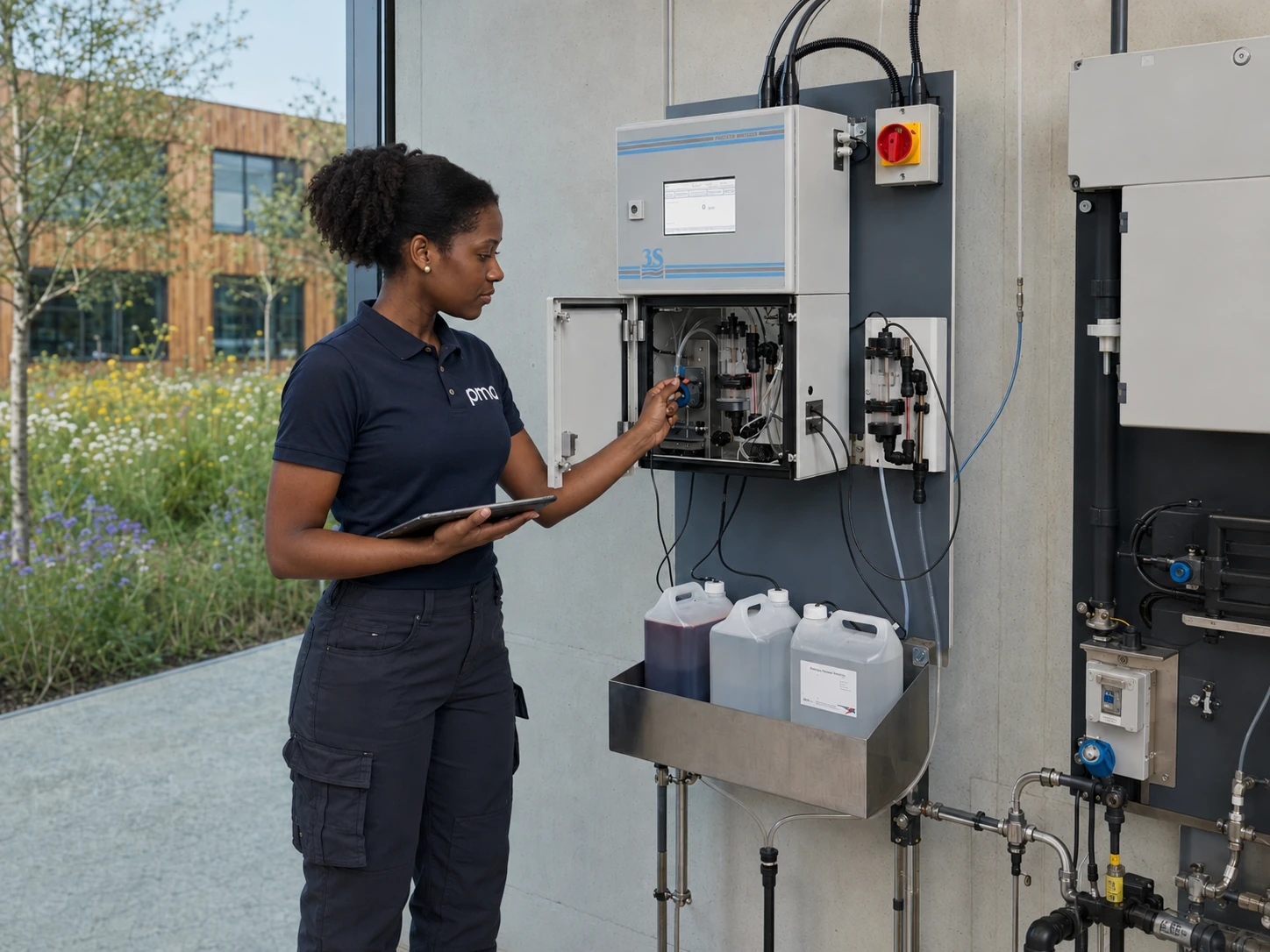
Keep the chemistry record alongside the operating changes that can affect which water reaches the analyser.
Name the contributing boreholes or surface-water sources and any blending. Retain abstraction and source-switching events with the original measurements.
Map aeration, oxidation, filtration and the relevant take-offs. Keep each stage’s operating state and sampling times rather than treating the works as one unchanged route.
Record individual filters in service, backwash start/end and return-to-service arrangements. Preserve any available individual-filter evidence when reviewing a common outlet.
Record method, sample preparation and units for each metal. Sample filtration can change the fraction presented for analysis, so retain that detail in online and reference records.
Use a changing result to guide follow-up sampling and a treatment review, with each observation tied to its point.
Consider hydraulic travel between treatment points, sample-line delay and batch intervals. Measurements at the same clock time may describe different water.
Compare like fractions, units and preparation. Confirm the reference method and handling before interpreting a difference as removal performance.
Review changes against the filters and routes in service. A combined result cannot identify which individual filter changed without supporting evidence.
Record operator observations, follow-up sample IDs, agreed response and next check. Keep calibration, reagent and cleaning events alongside the trend.
Share the source and treatment drawing, proposed points, expected raw and treated concentrations, reporting units and current reference methods. Include sample conditions, solids, preparation, travel times and the intended operating decision. PMA can review iron and manganese configurations and the practical sampling arrangements for those duties.
PMA connects the measurement, installation and operating team. We help you review the application, select suitable instrumentation and plan commissioning, training and ongoing service.
Speak to the PMA team about your instruments, reagents or service requirements. Tell us what you need, and we’ll help you find the right next step.
Trusted by our clients


Share your requirements below. All fields are required.
Your enquiry goes directly to our team. Your details are used to respond to you, and you won’t be added to a marketing database. Read our privacy policy.
To find out more about our range of sensors, request a callback or ask a technical question, our expert staff are always on hand. Our focus has always been to deliver world-class customer service.
Get startedWe use optional Google Analytics cookies to understand which pages are useful. Analytics stays off unless you accept. Read our privacy statement.