Identify the flow route
Record the vessel supplying the outlet, valve arrangement, bypass state and any blending. Mark each changeover so the trend is not interpreted as one uninterrupted vessel run.



Connect hardness results to the vessel, flow route and regeneration record your team can review.
A change in outlet hardness is easier to investigate when the result identifies the softener in service. Map the duty and standby vessels, bypasses, blending connections and sampling point before setting up the record. A common outlet represents the water reaching that header; it cannot identify an individual vessel on its own.
The 3S colourimeter can be configured for a suitable low-level hardness duty. The manufacturer describes a calcium-based method reported as CaCO3. Confirm the measured fraction and reporting basis before comparing it with a laboratory total-hardness result. PMA can review the method, expected concentration and sample arrangement for the proposed point.
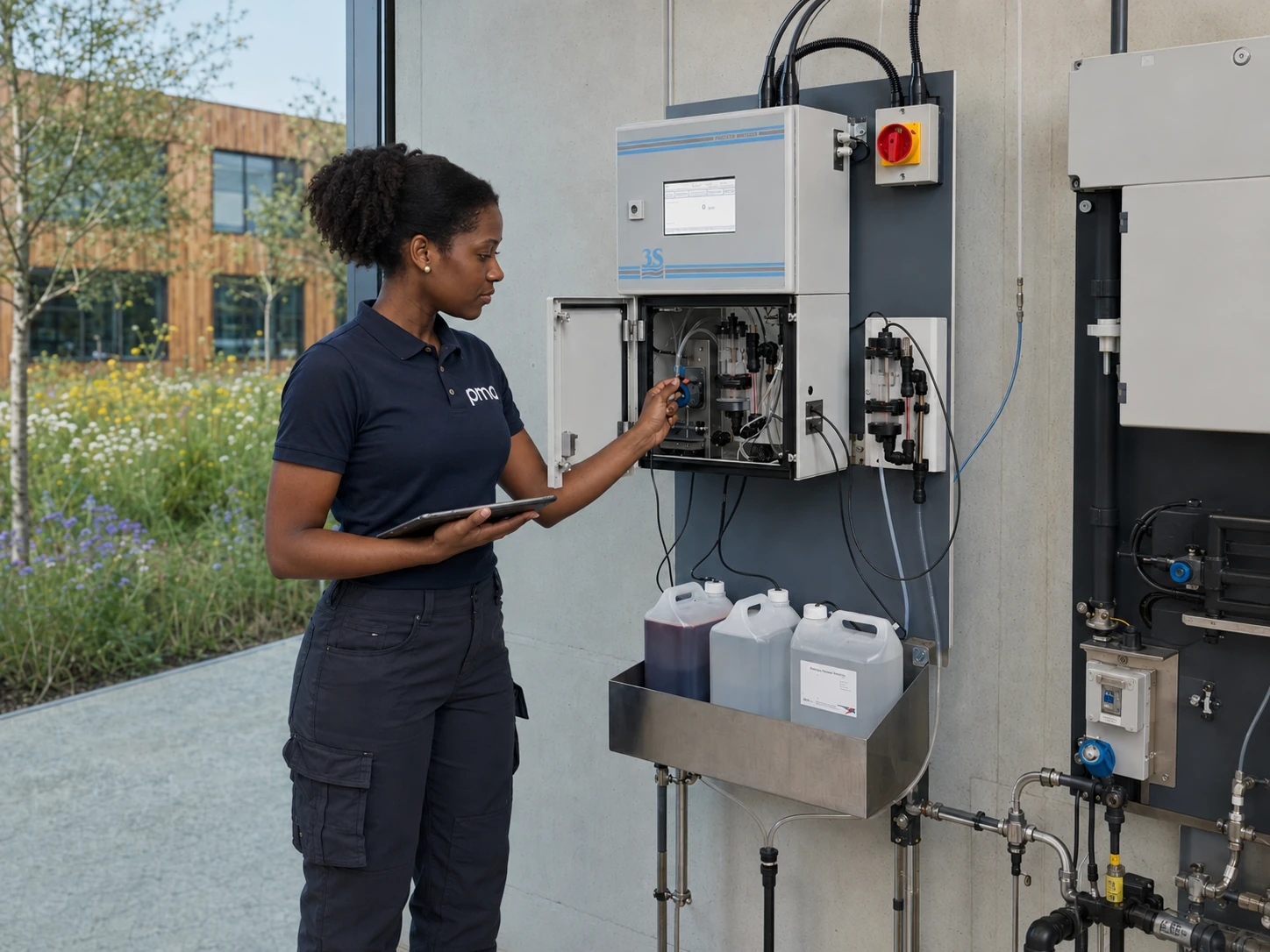
Keep analyser results alongside the operating changes that could explain them. A useful record follows the whole cycle rather than one isolated reading.
Record the vessel supplying the outlet, valve arrangement, bypass state and any blending. Mark each changeover so the trend is not interpreted as one uninterrupted vessel run.
Keep the site’s stage names and start/end times for regeneration, rinse and return to service. Retain operator observations and the reason for any interruption or repeated stage.
Record the sample-line route, flow and conditioning arrangement. Establish the transport delay and the configured batch-analysis interval before assigning a result to a particular stage.
Keep calibration, validation, cleaning and reagent events alongside valid sample results. Mark missing or invalid measurements explicitly instead of presenting them as low hardness.
Use a changing result to organise an investigation under the site’s operating procedures. Agree the response and owner before the analyser is put into service.
Check whether a changeover, bypass or blended stream could explain the reading. Compare the result with the recorded flow route and operating state before attributing it to resin performance.
Collect the agreed reference sample at the defined point and time. Record its preparation, method and reporting units. Resolve a calcium-based versus total-hardness difference before judging agreement.
Save the original trend, follow-up sample ID, action taken and next review time. Identify who will check the next cycle and whether the monitoring arrangement remained unchanged.
A colourimetric trend supports the chemistry programme. Agree alarm settings and any interlock through the site’s engineering procedures; do not treat this page as a universal protection setting.
Send PMA the vessel and bypass sketch, sampling-point photograph, expected calcium/hardness range, reporting basis, regeneration sequence and reference method. Include sample temperature, pressure, available flow, drain arrangement and the required analysis schedule. These details help the team review the configuration before installation.
PMA connects the measurement, installation and operating team. We help you review the application, select suitable instrumentation and plan commissioning, training and ongoing service.
Speak to the PMA team about your instruments, reagents or service requirements. Tell us what you need, and we’ll help you find the right next step.
Trusted by our clients


Share your requirements below. All fields are required.
Your enquiry goes directly to our team. Your details are used to respond to you, and you won’t be added to a marketing database. Read our privacy policy.
To find out more about our range of sensors, request a callback or ask a technical question, our expert staff are always on hand. Our focus has always been to deliver world-class customer service.
Get startedWe use optional Google Analytics cookies to understand which pages are useful. Analytics stays off unless you accept. Read our privacy statement.