Suspended solids & SVI analysis.Discover S3A
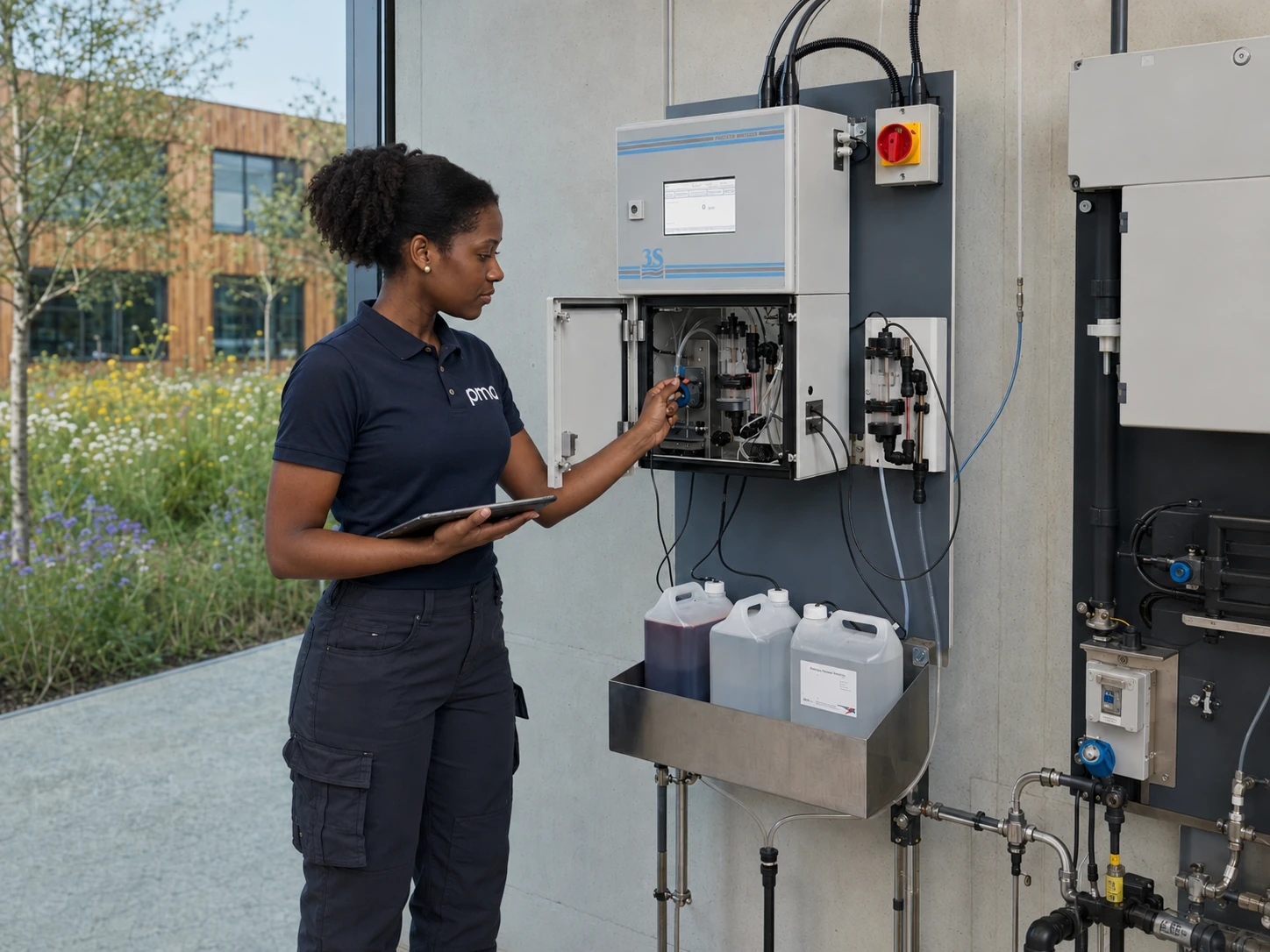
PMA technician operating a 3S colourimeter beside water-treatment tanks

Follow phosphorus removal

Connect phosphate results to dosing, treatment stages and comparable reference checks.

Start with the treatment decision

A changing phosphate result can help the operating team investigate a chemical-dosing change, a biological-treatment change or a final-effluent event. First define which question the monitoring point will answer. A result before chemical addition describes a different duty from one after settlement or tertiary treatment. Mark those points on the process drawing and identify any bypass, storm-flow or return-stream connection that can change the water reaching them.

The 3S colourimeter offers orthophosphate methods for municipal wastewater applications. Choose the analytical configuration around the concentration, sample conditions and decision required. If the duty is total phosphorus, include the manufacturer’s digestion module and review the complete sampling and analysis arrangement. An orthophosphate result and a total-phosphorus result describe different measurements.

PMA technician checking the sample and reagent section of a 3S colourimeter

Make the treatment record useful

Keep the measurement and its operating context together so another shift can review the same record.

Record the phosphorus fraction

Use an unambiguous channel name. Record whether the sample is filtered, what preparation is used and whether the result is expressed as phosphorus or phosphate. Keep the same definition in the analyser display, control-system tag and reference report. A filter or digestion step belongs in the measurement definition, not just the maintenance notes.

Mark where the sample comes from

Name the stream and stage. Retain the flow route and the position of dosing, mixing, separation and tertiary treatment relative to the take-off. If more than one point is monitored, keep each point’s sampling and analysis times separately.

Link the trend to operation

Keep dose changes, chemical identity, plant flow, treatment units in service and operator observations alongside the chemistry record. A dose setting alone does not show how much chemical reached the process. Retain the available pump, delivery and tank records when investigating a change.

Keep analyser events visible

Mark calibration, cleaning, validation, reagent replacement and missing measurements on the time series. Establish the sample travel time and configured batch interval. A reading reported after a dosing change may still describe water sampled under the earlier arrangement.


Investigate a changing residual

Use the trend to organise follow-up checks under the works’ established operating procedures.

Check the route first

Compare the sample point with the current operating arrangement. Look for a changed flow route or return stream before interpreting the result as a change in removal performance. Record the treatment response agreed by the responsible operator.

Build a fair comparison

For upstream/downstream assessment, match the measured fraction, reporting units and preparation. Consider hydraulic travel and sampling times. Two readings taken at the same clock time may not follow the same water through the works. Keep concentration comparisons separate from any load calculation, which also needs suitable flow data.

Keep the reference check comparable

Record the reference sample point, time, preservation and analytical method. A total-phosphorus laboratory result cannot directly validate an undigested orthophosphate channel. Resolve the different measurement definitions before assessing agreement.

Leave a clear handover

Save the original trend, operating changes, reference sample IDs, actions and next review time. Identify who will close the investigation and what evidence will show whether the agreed response worked.

Bring PMA a phosphorus-monitoring brief

Share the process drawing, monitoring points, desired fraction, expected range and units, sample conditions and available reference results. Include the dosing/treatment decision, required update interval, sample route, utilities and drain. PMA can review the analyser method, any digestion requirement and the sample system with the team that will operate it.

Manufacturer method information

Looking after
your world since 1971

PMA connects the measurement, installation and operating team. We help you review the application, select suitable instrumentation and plan commissioning, training and ongoing service.

Discuss your application

Let’s talk about your application.

Speak to the PMA team about your instruments, reagents or service requirements. Tell us what you need, and we’ll help you find the right next step.

  • Advice for your application. Find the right instruments, sensors and chemical reagents for your process.
  • Practical service support. Discuss commissioning, calibration, maintenance or an instrument issue with our team.
  • Clear next steps. Ask a technical question or request a callback, with your site and measurements in mind.
  • An enquiry, not a mailing list. Your details are used to respond to you. You won’t be added to a marketing database.

Trusted by our clients

Prefer to speak with us?

Call 01484 843 708

You can also email [email protected].

Tell us how we can help

Share your requirements below. All fields are required.


Your enquiry goes directly to our team. Your details are used to respond to you, and you won’t be added to a marketing database. Read our privacy policy.