


An ammonia analyser is often specified by range first. That is necessary, but it is only part of the enquiry. A system must also receive a representative sample, apply an appropriate method and report the result on the basis the site needs.
At UK wastewater treatment works and industrial water plants, the same headline range can describe very different applications. Final effluent, mixed process water and a relatively clean water stream place different demands on sampling and maintenance.
Define what “ammonia” means in the specification
Check whether the required result refers to ammonium, free ammonia or a defined total ammonia measurement. Confirm whether it is expressed as nitrogen or on another chemical basis. Match that definition across the analyser, laboratory comparison and control-system display.
PMA’s ammonia monitoring guide provides application context. When sending an enquiry, include an example of the current laboratory report with the method and reporting units. Those details help avoid choosing an instrument around an ambiguous label.
Review the method against the sample matrix
The AccuSeries platform offers different analytical approaches and configurations. The choice should follow the target parameter and sample conditions rather than assuming every method suits every stream.
PMA’s online colorimetric analyser and ion-selective electrode analyser pages describe two approaches. Colour, suspended material and other constituents need review against the specific method. Ask for a configuration recommendation based on the actual sample and required performance.
Start with a representative sample
A reliable ammonia result starts with a representative sample at the analyser inlet.
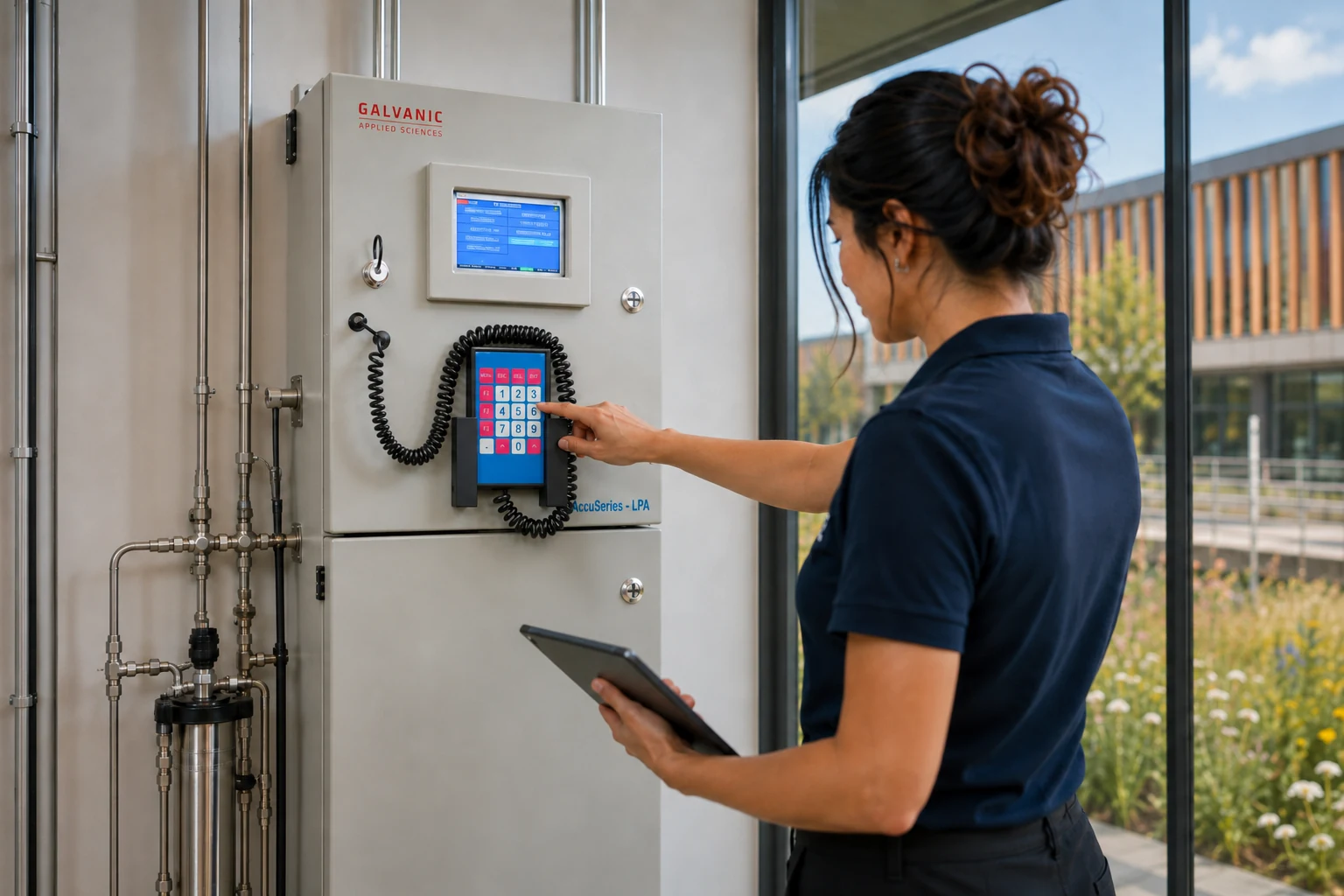
Make sample conditioning visible in the design
List every step between the process and the measuring system: take-off, pipework, pumping, screening or filtration, any conditioning and the final drain. Record why each step is needed. A conditioning system should help deliver the required sample without unintentionally changing the result being sought.
Consider the time taken for the sample to arrive, the cleaning routine and what happens when flow stops. An analyser cannot provide a representative process result from a blocked or stale sample line. Flow monitoring and maintenance access therefore belong in the specification.
Plan the operating workload
Confirm the requirements for reagents, calibration or check solutions, consumables and waste handling for the selected method. Then match replenishment and servicing to the staffing and access available at the site. These requirements vary by configuration; avoid assuming that a platform-level feature applies to every analyser.
For several streams, review the multi-stream and multi-parameter options. Include switching and analysis time in the update interval for each stream. The AccuSeries parameter microsite provides a route into the available applications.
Prepare a useful ammonia analyser enquiry
- Sample source, expected range and the measurement/reporting basis.
- Known solids, colour and other relevant sample constituents.
- Required update interval and the process decision the result supports.
- Available utilities, drain arrangements and sample-line distance.
- Existing laboratory method and planned verification routine.
PMA can help UK teams turn those details into a practical analyser specification. Send your sample information and installation requirements for a review and quotation.