


A portable instrument is useful when operators need to check several basins, investigate an online trend or compare conditions across a treatment works. The result is most useful when the measurement point and method are repeatable.
Two common checks answer different questions. Mixed liquor suspended solids (MLSS) describes solids concentration in a sample or measurement zone. Sludge blanket measurement locates the solids interface within a clarifier or settlement tank. Neither result should be used as a substitute for the other.
Choose the measurement for the decision
If the concern is the concentration of mixed liquor, use an appropriate suspended-solids measurement. If the concern is the position of the settled sludge in a clarifier, measure the blanket. State which question is being investigated before comparing readings from different locations.
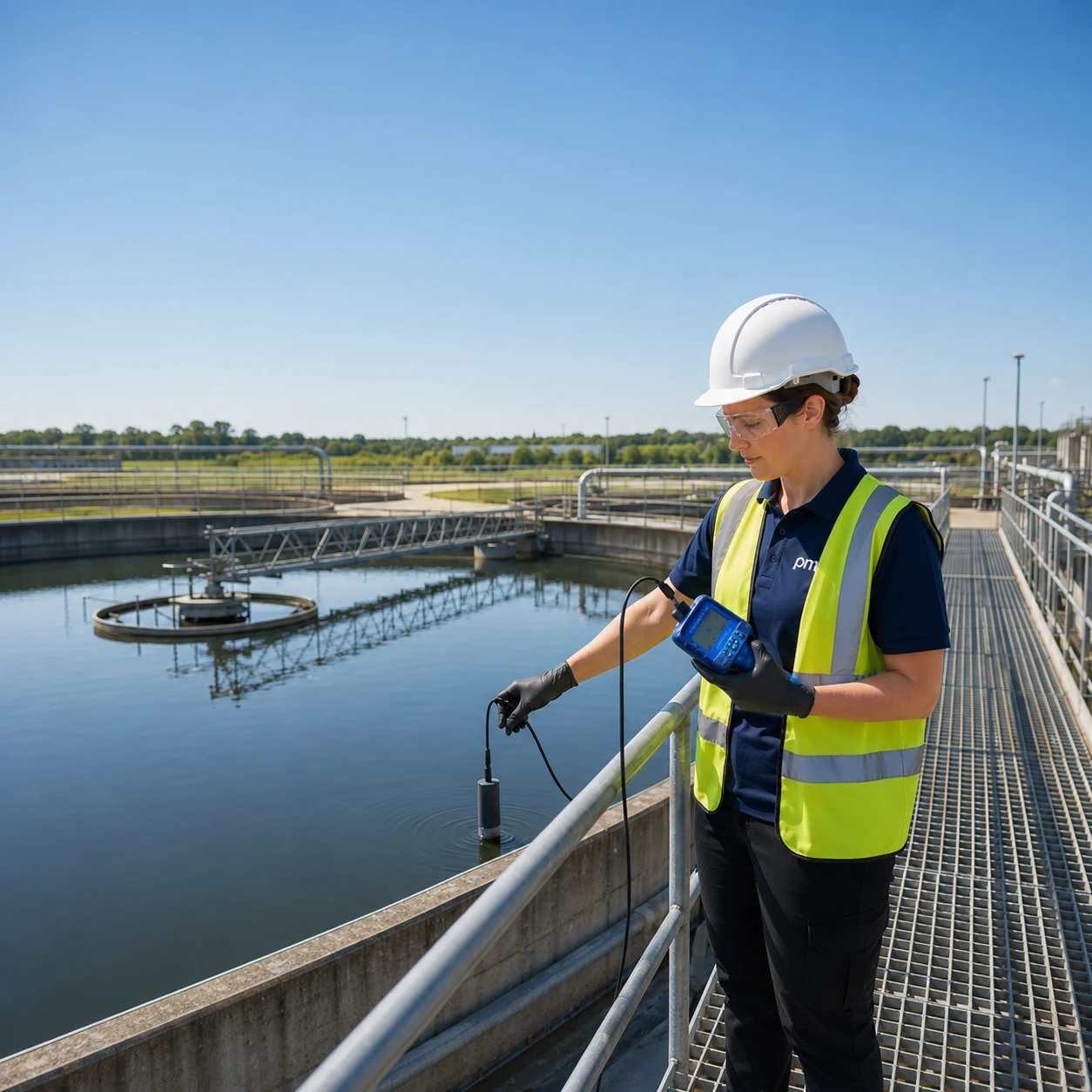
The Royce Aqua 22 portable system supports suspended-solids and sludge-blanket work with the appropriate sensor configuration. The portable sludge meter microsite provides product and application information for selecting the required arrangement.
Make the tank-side routine repeatable
Use the same accessible measurement points and a consistent approach to sensor placement. Record the reference used for depth, the operating state and any unusual turbulence or floating material. Follow the product instructions for deployment and allow the reading to settle as required.
Work within the site’s safe-access procedures. A portable measurement does not justify reaching beyond a barrier or entering a restricted area. The installation should provide a practical sampling or deployment point that operators can use consistently.
Use each measurement for its purpose
MLSS describes the solids concentration. Blanket depth describes where the sludge is in the tank.
Check sensor condition and calibration
Inspect and clean the sensor according to its instructions. Deposits on an optical measurement surface can affect the response, while a changed sample matrix may require a review of the established solids calibration. Record the sensor used so that later results can be traced to the same configuration.
For suspended-solids comparisons, use a representative sample and the site’s agreed laboratory reference procedure. PMA’s TSS measurement guidance explains the wider application context. Keep units and measurement locations explicit in exported records.
Use the measurements alongside settlement tests
A portable blanket reading helps describe conditions in the clarifier. A settlement test examines how a collected sample behaves under the test conditions. These observations complement each other, but a cylinder result is not a direct measurement of the full tank.
The S3A settlement analyser provides a separate workflow for MLSS and settlement parameters. When investigating a change at a UK wastewater works, compare the relevant records with flow, loading and operational history before drawing a process conclusion.
Build a useful portable measurement log
- Tank or basin, measurement position and depth reference.
- Time, operating condition and any unusual observations.
- Instrument, sensor and current calibration or verification details.
- Stable result, units and the associated laboratory check where applicable.
- Cleaning or maintenance performed before or after the reading.
PMA can help select a Royce Aqua 22 configuration for UK wastewater operations and discuss service and calibration support. For a quotation, provide the expected solids range, tank depth, number of locations and the measurements you need.