
Choosing a decantation valve is more than matching a pipe connection. The valve has to work with the liquids, the separation available in the vessel and the driving head through the discharge route.
For UK chemical processing and tank-dewatering applications, a useful starting point is a sketch of the complete arrangement. Show the vessel, liquid levels, outlet, valve and downstream destination before selecting a nominal size.
Confirm that the liquids separate
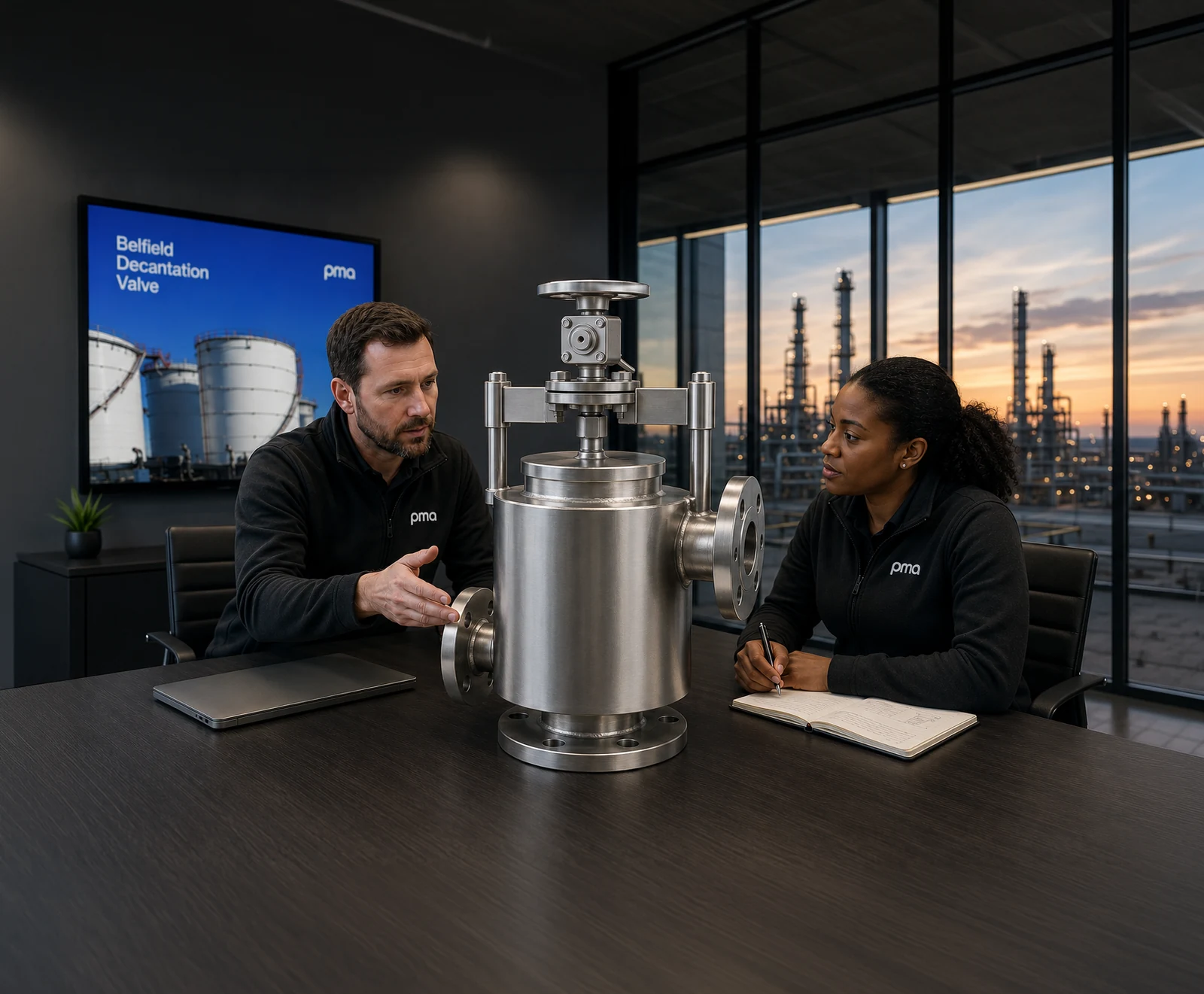
The Belfield decantation valve is intended for suitable separated, immiscible liquid phases. In the relevant arrangement, the heavier phase is discharged and the valve responds as the lighter phase reaches it. The process must first provide a usable separation.
An emulsion, dissolved contamination or suspended solids creates a different selection question. Do not assume that a decantation valve will separate an emulsion or remove dissolved material. PMA’s chemical decantation and liquid recovery guidance helps frame the application review.
Describe both liquids at operating conditions
Provide the density or specific gravity of each phase at the actual operating temperature, together with viscosity and chemical composition. Include the variation expected across batches. The difference between the phases is part of the suitability assessment, so a room-temperature water test is not a complete specification for a different process.
List materials and seal compatibility requirements, solids, deposits and any tendency to foam or emulsify. These details help determine whether the proposed duty is suitable and what needs further confirmation.
Start with an established interface
A decantation valve controls an established liquid interface; it does not create the separation.
Account for the available head
Required flow cannot be considered in isolation from the pressure or gravity head available to drive it. Include the lowest and highest operating liquid levels, downstream pressure, pipe length, fittings and any restrictions in the route.
The Belfield sizing and selection page sets out the information to provide. The dedicated Belfield microsite contains additional product and application guidance. Ask for a review of the complete duty rather than selecting solely from a headline flow value.
Think through abnormal and maintenance conditions
Describe what happens during filling, draining, batch changes and loss of the normal liquid layers. Agree the isolation, access and inspection arrangements. A valve operating automatically still needs a defined maintenance routine and an appropriate place in the site’s wider control and protection strategy.
For automatic tank dewatering, include the discharge destination and the consequences of an unexpected fluid reaching it. Selection should follow the actual process risk assessment; a product name alone does not establish environmental protection performance.
A practical enquiry checklist
- Both fluid identities, densities, viscosities and operating temperatures.
- Expected separation, interface behaviour, solids and emulsion conditions.
- Required flow, available head and downstream backpressure.
- Pipework arrangement, connection requirements and material compatibility.
- Operating sequence, access and maintenance expectations.
PMA can review that information with you for a UK liquid-recovery or dewatering project. Send a process sketch and the fluid data when requesting a Belfield quotation.