Suspended solids & SVI analysis.Discover S3A

Aquamonitrix real-time nitrate monitoring

Follow nitrate changes in source water, rivers and treatment processes with automated analysis at your monitoring point.

Understand nitrate changes between site visits

A periodic collected sample describes one moment. Nitrate concentrations can also change with rainfall, catchment inputs, abstraction and treatment operations. A frequent on-site record helps your team see the timing and pattern of those changes.

Aquamonitrix NOx-monitrix Mobile automates nitrate analysis using ion chromatography followed by UV detection. It also reports nitrite separately, adding useful context without combining the two results into a single nitrogen value.

Use the data to investigate your site, compare monitoring points and guide follow-up sampling. PMA can help you specify a representative sample arrangement and a practical deployment.

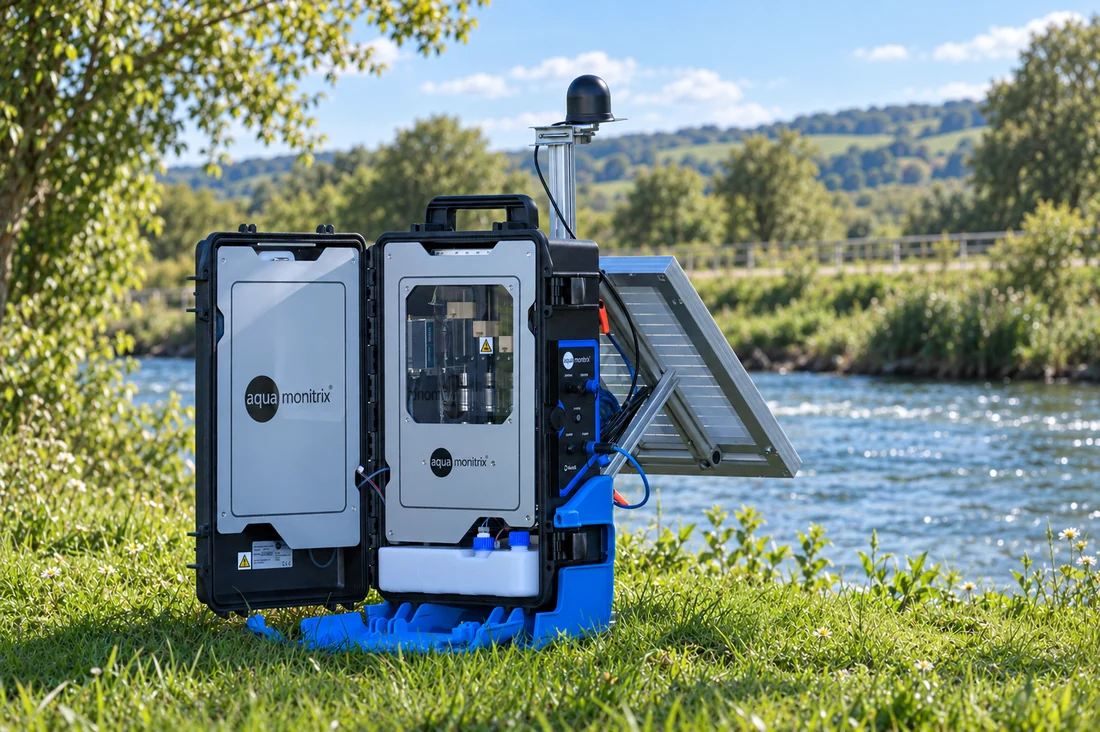
Open Aquamonitrix analyser and solar panel beside a river

Choose the nitrate question you need to answer

Rivers and catchments

Follow nitrate trends through changing flow and weather conditions. Compare upstream and downstream points, and relate events to land use and confirmatory sampling.

A result at one point describes that sample; identifying a source requires wider investigation.

Source water and abstraction

Review nitrate variation in boreholes, surface-water sources and blended supplies. Place the measurement where it informs your abstraction or treatment decision.

Confirm the ion or nitrogen reporting basis before comparing datasets.

Treatment and water reuse

Observe nitrate entering or leaving a treatment stage, or assess treated water for a reuse application. Interpret the trend alongside flow, process conditions and other measurements.

Automation provides information; control changes need an agreed operating strategy.

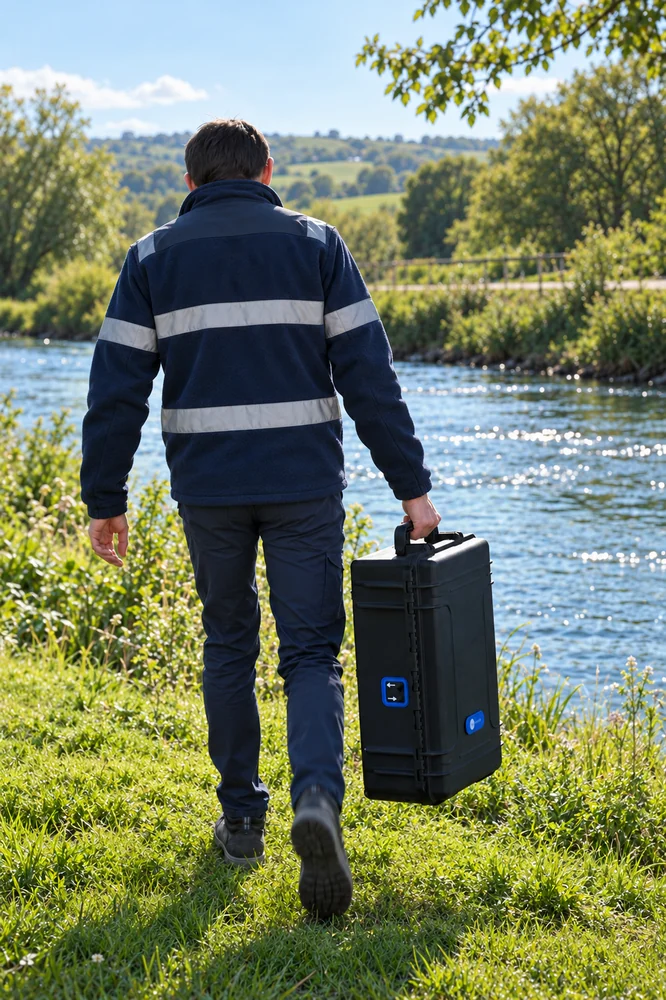
PMA engineer carrying a portable analyser case beside a river

Plan the complete route from river to result

The analyser needs a sample that represents the monitoring point. Assess the inlet position, seasonal water levels, suspended material, sample-line length and the delay between collection and analysis.

For a remote site, plan secure mounting, service access, suitable temperature protection and a realistic power budget. Solar and battery sizing depends on the analytical schedule, communications and local daylight.

Choose the recording and alert arrangements your team will use. Datamonitrix can provide remote data and instrument status when configured; a control-system installation can use the specified communications interface.

Keep a documented routine for inlet inspection, cleaning, eluent replenishment and checks against independent samples. Field automation should make that routine more informed and practical.


Nitrate performance: read the units and conditions

Published Mobile nitrate range

The freshwater and wastewater range is 0.6–500 mg/L as NO3−. At 35 ppt salinity, the published lower limit is 1.0 mg/L as nitrate.

These values are expressed as the nitrate ion, not nitrate-nitrogen. Make that distinction explicit in reports and system configuration.

Sampling and measurement method

Mobile can analyse as frequently as every 15 minutes. Chromatographic separation precedes UV detection and delivers separate nitrate and nitrite concentrations.

Account for the sample journey and analysis cycle when comparing results with rainfall, flows or process events.

Technical basis: NOx-monitrix Mobile manufacturer specification. Confirm the exact model and sample suitability with PMA.

A published example of catchment monitoring

Aquamonitrix describes a West Cork river-basin deployment for Ireland’s Local Authority Waters Programme. Monitoring began in 2021, with a solar-powered upstream installation and a mains-powered downstream installation.

The paired record was used to investigate nutrient changes in the catchment. A short-lived nitrite event prompted follow-up investigation and collected-sample checks, illustrating why the separate nitrite result can be useful alongside nitrate.

This is a manufacturer-reported historical case, rather than a claim about a PMA customer installation. It provides a practical example of using frequent measurements within a broader investigation.

Read the catchment case study

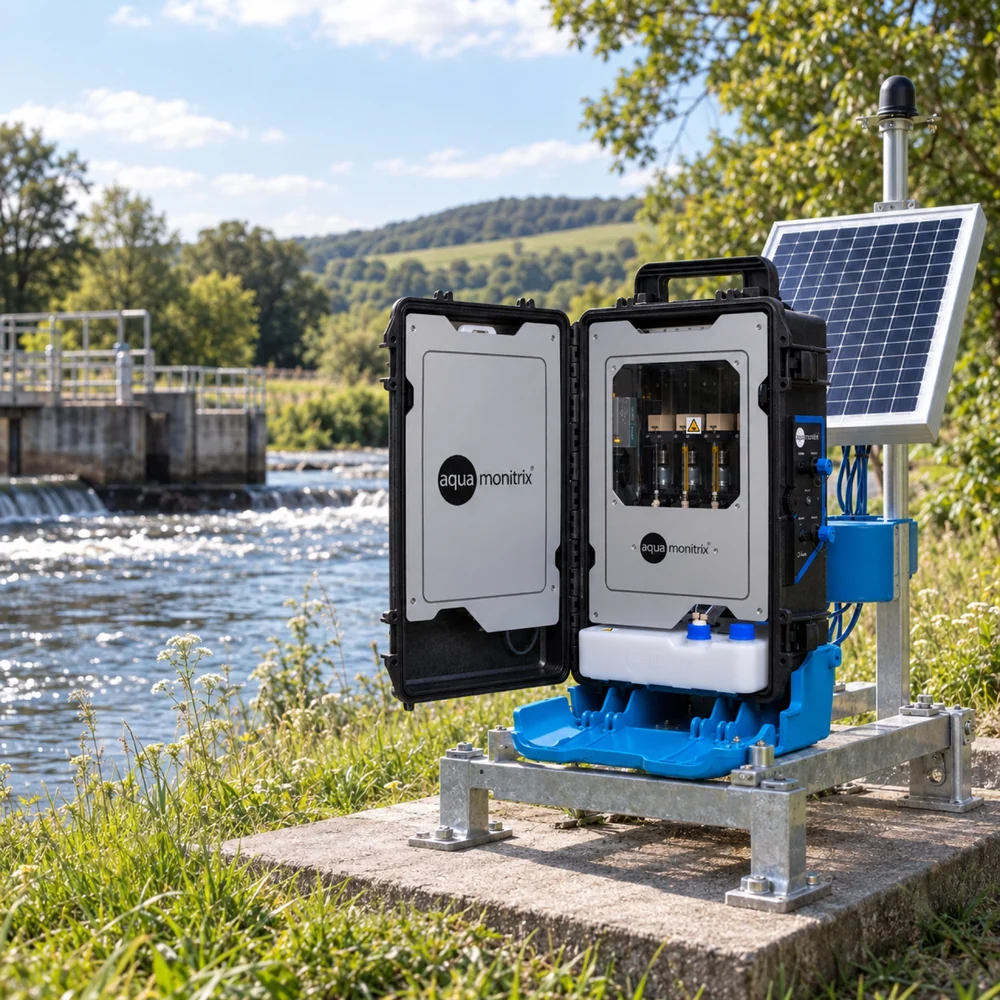
Aquamonitrix river station with a solar panel

Give your team a useful nitrate monitoring brief

Tell PMA the monitoring purpose and location, expected nitrate concentrations and reporting units, water matrix, salinity, solids and temperature. Include access, available power, sample-line route and data requirements.

We can then review the configuration, sampling frequency and maintenance arrangements with you before installation.

Plan nitrate monitoring

Your questions, answered

Can nitrate and nitrate-nitrogen be compared directly?

They use different reporting bases. Nitrate is the concentration of the complete nitrate ion; nitrate-nitrogen expresses the nitrogen portion. Record the basis and use the correct conversion before comparing values.

Is a 15-minute schedule always required?

No. Choose the frequency around the changes you need to follow, available power, consumable use and the practical operating routine. Confirm the configuration with PMA.

Can the analyser identify where nitrate pollution came from?

A concentration record helps reveal changes and guide investigation. Source attribution also needs information such as flow, monitoring locations, land use and confirmatory sampling; the analyser alone does not identify the source.

Explore the measurement you need

Nitrate and nitrite analyser

Explore the complete Aquamonitrix overview, applications, technical details and resources.

Explore Aquamonitrix

Real-time nitrite analyser

Understand direct nitrite measurement in drinking water, wastewater and aquaculture.

Explore the nitrite analyser

Let’s talk about your application.

Speak to the PMA team about your instruments, reagents or service requirements. Tell us what you need, and we’ll help you find the right next step.

  • Advice for your application. Find the right instruments, sensors and chemical reagents for your process.
  • Practical service support. Discuss commissioning, calibration, maintenance or an instrument issue with our team.
  • Clear next steps. Ask a technical question or request a callback, with your site and measurements in mind.
  • An enquiry, not a mailing list. Your details are used to respond to you. You won’t be added to a marketing database.

Trusted by our clients

Prefer to speak with us?

Call 01484 843 708

You can also email [email protected].

Tell us how we can help

Share your requirements below. All fields are required.


Your enquiry goes directly to our team. Your details are used to respond to you, and you won’t be added to a marketing database. Read our privacy policy.