Key features
- Real-time interface detection
- Automatic tank dewatering
- Liquid/liquid and vapour/liquid measurement
- Two-wire loop-powered ID200h option
- 4–20 mA with HART communication option
- Model-specific materials and process connections

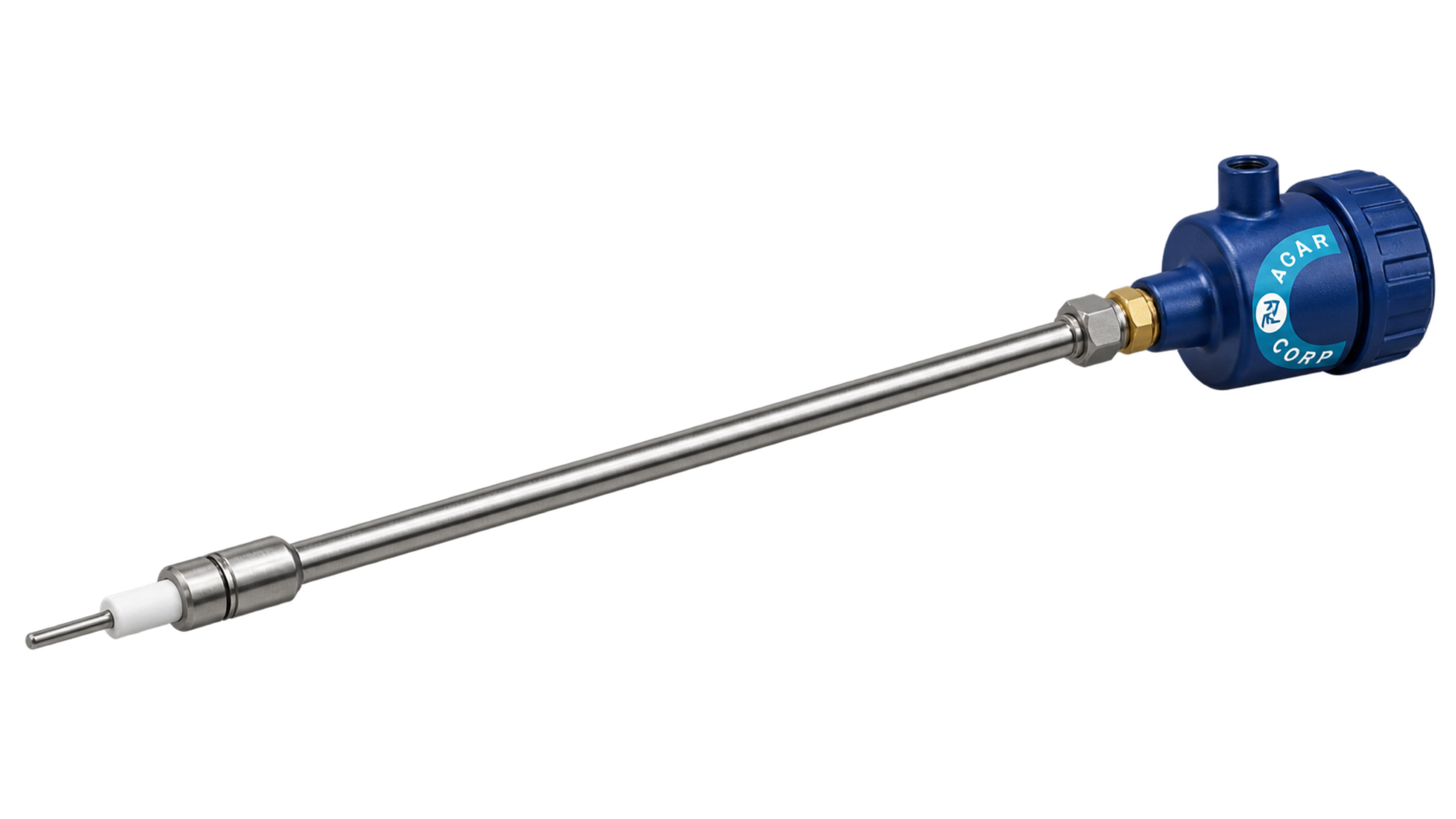
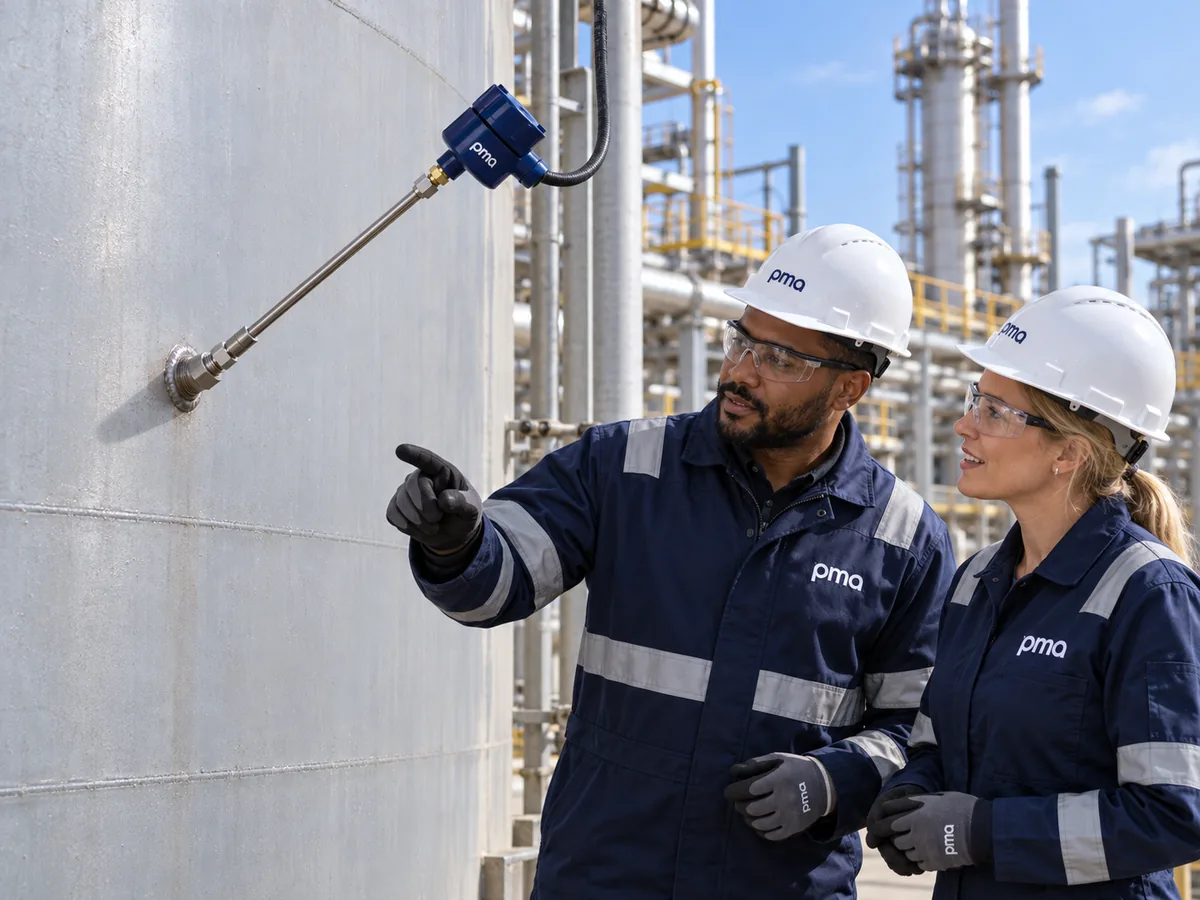
Reliable oil, water and emulsion interface measurement with the Agar ID-200 Series.
Interface detection
The Agar ID-200 Series Interface Detectors measure and control liquid/liquid and vapour/liquid separation processes, including emulsions and foam. They help operators identify the interface between separating phases in tanks and process vessels.
A range of models, process connections and output options supports tank dewatering, desalters, decanters, dehydrators and coalescers. PMA can help match the detector and control approach to your process, installation and operating requirements.
Tell us about your vessel, the liquids being separated and the control response you need. Our team can help identify an appropriate configuration.
The product image shows ID-200 configurations used for interface detection and automatic water draw-off. Final model, connection, wetted materials and output selection must be checked against the process conditions.

Request the relevant datasheet from PMA or explore the dedicated Agar site for product specifications, application guidance and installation planning.
The ID200h is available as a two-wire, loop-powered interface detector with HART communication. It broadcasts a high-frequency, low-power signal and derives an analogue output from the energy absorbed by the medium around the antenna.
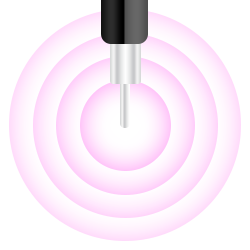
A high-frequency, low-power signal is broadcast from the probe.

The detection zone extends around the sensing tip.
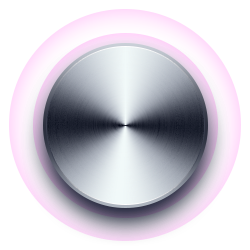
The surrounding oil, water or emulsion absorbs part of the signal.

The instrument generates an analogue output relative to the absorption rate.
Automatic tank dewatering uses continuous phase measurement to inform a controlled drain sequence. The final valve logic, permissives and fail-safe response must be agreed for the vessel and operating philosophy.
Continuously detect the oil, water or emulsion phase near the draw-off point.
Confirm that the measured phase satisfies the configured water condition.
Command the drain valve according to the site control philosophy and interlocks.
Close the valve as the transition or hydrocarbon-rich phase approaches.
Use the measurement and valve status for alarms, trends, verification and maintenance.
Use the application guidance and historic case-study evidence as a starting point, then ask PMA to assess the conditions and control objective for your installation.
Interface measurement can support separation of water, oil, gas and solids, helping operators manage contamination and process stability.
In one reported US refinery application, improved interface control reduced hydrocarbons sent to wastewater treatment by 82%. Results are site-specific and are not a performance guarantee.
A historic application result demonstrating the potential value of better separation control.
The correct detector configuration depends on the phases, vessel, operating conditions and required control response. Share the following information with PMA so the model and installation can be reviewed against the application.
Liquids, vapour, solids and the expected emulsion range.
Normal, start-up and upset temperature and pressure.
Wetted-material, seal and cleaning-chemical compatibility.
Connection, probe length, access and representative measurement position.
Loop power, scaling, HART access, alarms, interlocks and valve response.
Site standards, hazardous-area needs and required certification.
Final model, materials, connection and operating limits are application-specific.
Practical guidance for specifying interface measurement and control.
The series is used for interface measurement in liquid/liquid and vapour/liquid separation processes, including applications involving emulsions and foam.
Tank dewatering is one of the applications supported by the range. The selected model, process connection and control arrangement must suit the vessel and liquids involved.
The series includes control capabilities for antifoam and demulsifier feed systems, as well as automated responses to process upsets. Discuss the required control function with PMA when specifying the system.
Tell us about the liquids, vessel or process, operating conditions, available connection and required outputs. We can then help with model selection and the relevant technical documents.
Use the dedicated Agar resource site for deeper application guidance, then speak to PMA about the conditions and control objective for your installation.

Review the measurement, validation, drain, stop and record sequence used in an automatic system.

Understand how wash water, mixing, electrostatic coalescence and interface control support separation.

Review published model, material and connection information before confirming the application with PMA.
Visit the dedicated Automatic Tank Dewatering site for detailed product information, application guidance and technical resources for tank dewatering and desalter control.

Our team of dedicated field support technicians are vastly experienced in applications and installations. We understand how analysers work, why they were installed and what data they need to produce.
Scroll down to use our contact form to enquire about spare and replacement parts. If you do not know the part number or name, simply describe the spare part. Our team of expert engineers are here to help.
Submit your details at the bottom of this page and include information about your application so our engineers can provide the relevant technical documents for your requirements.
Explore our latest updates, product launches, case studies, and behind-the-scenes highlights, all in one place. Like, share, and join the conversation as we help shape the future of smart environmental monitoring.
Speak to the PMA team about your instruments, reagents or service requirements. Tell us what you need, and we’ll help you find the right next step.
Trusted by our clients


Share your requirements below. All fields are required.
Your enquiry goes directly to our team. Your details are used to respond to you, and you won’t be added to a marketing database. Read our privacy policy.
To find out more about our range of sensors, request a callback or ask a technical question, our expert staff are always on hand. Our focus has always been to deliver world-class customer service.
Get startedWe use optional Google Analytics cookies to understand which pages are useful. Analytics stays off unless you accept. Read our privacy statement.