Suspended solids & SVI analysis.Discover S3A

Compare clarifier blanket readings

Keep the depth reference and process context clear when reviewing Royce Aqua 22 checks.

A comparison needs a shared reference

A blanket reading identifies an interface at a particular place and time. Comparing two numbers becomes useful only when their reference, measuring point and operating conditions are understood.

This PMA worksheet helps organise secondary-clarifier checks and hand over a change for review. It complements the instrument instructions and the works’ approved procedures; it does not set an alarm level or prescribe a return-sludge adjustment.

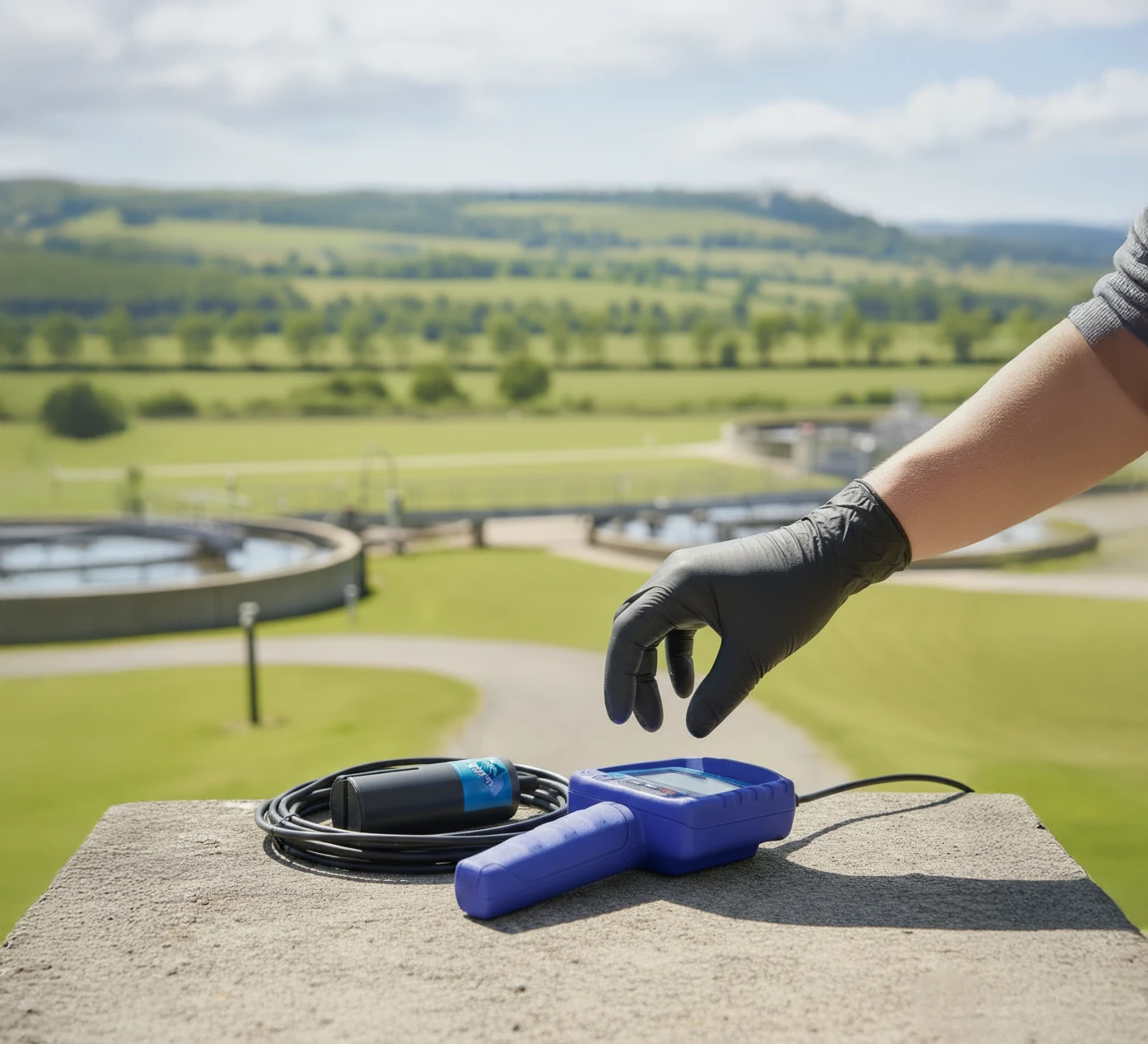
Royce Aqua 22 handheld meter and sensor at a wastewater treatment site

Separate depth from blanket height

State what each number means before plotting a trend or comparing tanks.

Depth below the water surface

The Aqua 22 depth measurement is referenced to the liquid surface. At an unchanged surface level and measuring point, a smaller depth means the detected interface is nearer the surface.

A change in the water level also changes this reference. Record it rather than treating every depth change as movement of the sludge alone.

Height above the tank floor

Blanket height above the floor is a different quantity. Derive it only if the actual water depth above the local floor at the measuring point is known and both measurements use compatible references.

Do not subtract a reading from a tank’s nominal maximum depth or compare a surface-referenced reading directly with an instrument reporting height above the floor.

A worked example, not a site result

At the same measuring point with the same water-surface level, interface depths of 2.4 m and 1.8 m place the second interface 0.6 m nearer the surface. These illustrative values do not establish the cause, a safe operating limit or a control action.

If the surface level or measuring point changed, reconcile the references before drawing that conclusion.

Build a comparison record

Keep the original observations alongside any interpreted result. Use the same agreed point codes on the instrument and the works record.

Identify the observation

  • Clarifier and fixed measuring-point code.
  • Date, time, operator, instrument and sensor identity.
  • Interface depth in metres and the stated liquid-surface reference.
  • Water level or water depth at that point, if known; mark unknown values explicitly.

Add the operating context

  • Observed inflow condition and which tanks were in service.
  • Return-sludge or desludging state, with recorded values where available.
  • Recent process changes and relevant weather or loading observations.
  • Sensor condition, checks performed and any difficulty obtaining a stable result.

Keep comparisons traceable

  • Reference the earlier record being compared.
  • Note differences in point, water level, sensor or operating state.
  • Retain repeat measurements separately; do not replace the original reading with an unexplained average.
  • Keep actual readings distinct from estimates, calculated heights and observations.

Set a review outcome

  • Record whether the observations are comparable or need another check.
  • Identify additional information requested and who will review it.
  • Use site-defined escalation limits and authorised operating procedures.
  • Record the reviewer’s decision and any follow-up observation.

Review a changed reading before acting

Check the measurement comparison

Confirm the point code, units, water-surface reference and sensor configuration. Where the site procedure permits, repeat at the agreed point and record the new observation without deleting the first.

If the change remains unexplained, share the records and sensor-check history with PMA rather than assigning a cause from one reading.

Check the process evidence

Use flow, loading, sludge-return history, effluent observations and the works’ established tests to investigate the process. A blanket-depth reading alone neither measures effluent suspended-solids concentration nor demonstrates discharge compliance.

MLSS concentration and a settlement test answer different questions. Keep their units, sampling times and methods explicit when reviewing them alongside the clarifier record.

Measurement guidance and PMA support

Use the dedicated instrument guide for its measuring method. Bring the comparison record to PMA when discussing the application or an unexpected response.

Royce Aqua 22 configuration

Review the PMA product page for compatible measurement functions and application support.

Royce Aqua 22

Blanket-depth method

The dedicated Portable Sludge Meter guide explains the depth reference and tank-side measurement routine.

Depth measurement guide

Let’s talk about your application.

Speak to the PMA team about your instruments, reagents or service requirements. Tell us what you need, and we’ll help you find the right next step.

  • Advice for your application. Find the right instruments, sensors and chemical reagents for your process.
  • Practical service support. Discuss commissioning, calibration, maintenance or an instrument issue with our team.
  • Clear next steps. Ask a technical question or request a callback, with your site and measurements in mind.
  • An enquiry, not a mailing list. Your details are used to respond to you. You won’t be added to a marketing database.

Trusted by our clients

Prefer to speak with us?

Call 01484 843 708

You can also email [email protected].

Tell us how we can help

Share your requirements below. All fields are required.


Your enquiry goes directly to our team. Your details are used to respond to you, and you won’t be added to a marketing database. Read our privacy policy.