

From the PMA archive. This article retains its original publication date; product availability, specifications and contact arrangements may have changed.
Project summary
Responding earlier to a changing source.
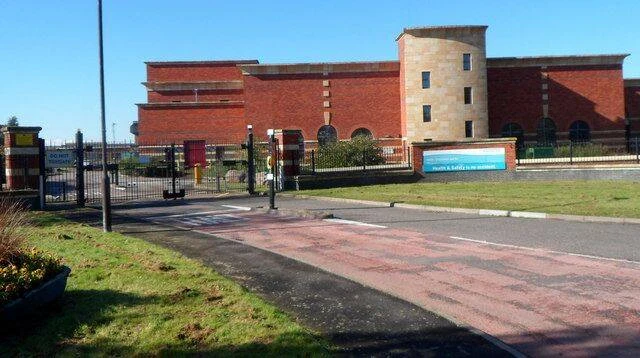
Mythe Water Treatment Works abstracts from the River Severn. The original case-study record describes a source that could change quickly during summer events, creating a demanding coagulation-control application.
In 2011, a one-year Compass trial compared the site’s existing dosing strategy with a site-specific predictive model. The trial used continuous UV-Vis and turbidity measurements alongside plant SCADA data and laboratory results.
How to read this case study
The equipment, model and financial values below relate to a historic installation. They are not a current universal specification or a performance guarantee.
Trial context
The works, the measurements and the control question
The assessment asked whether a continuously updated Compass prediction could react to changing incoming water more smoothly and promptly than the existing dosing algorithm.
Historic installation
A site-specific model built from operating data
An offline s::can UV-Vis spectrometer and an external turbidity sensor monitored incoming water. The resulting measurements were assessed with SCADA and laboratory data while Compass calculated a predicted coagulant-dose output.
Current Compass projects may use a different instrumentation generation. PMA confirms the applicable sensors, panel, signals and validation plan for each works.
Works capacity
136 ML/day
Capacity stated in the historic case-study record.
Source water
River Severn
A variable source requiring responsive coagulation control.
Trial period
One year
Model development and comparison against site operating data.
Assessment method
From continuous measurement to a predicted dose
The trial separated measurement, model development and comparison from the later decision to place the recommended dose online.
01
Measure
Continuous UV-Vis and turbidity data characterised changes in the incoming water.
02
Compare
SCADA records and laboratory results provided the plant context for model development.
03
Predict
The site-specific Compass model calculated how coagulant demand changed through the trial.
04
Validate
Predicted dosing was compared with the existing plant strategy before online control was adopted.
Recorded event
Earlier, smoother response during changing raw-water conditions
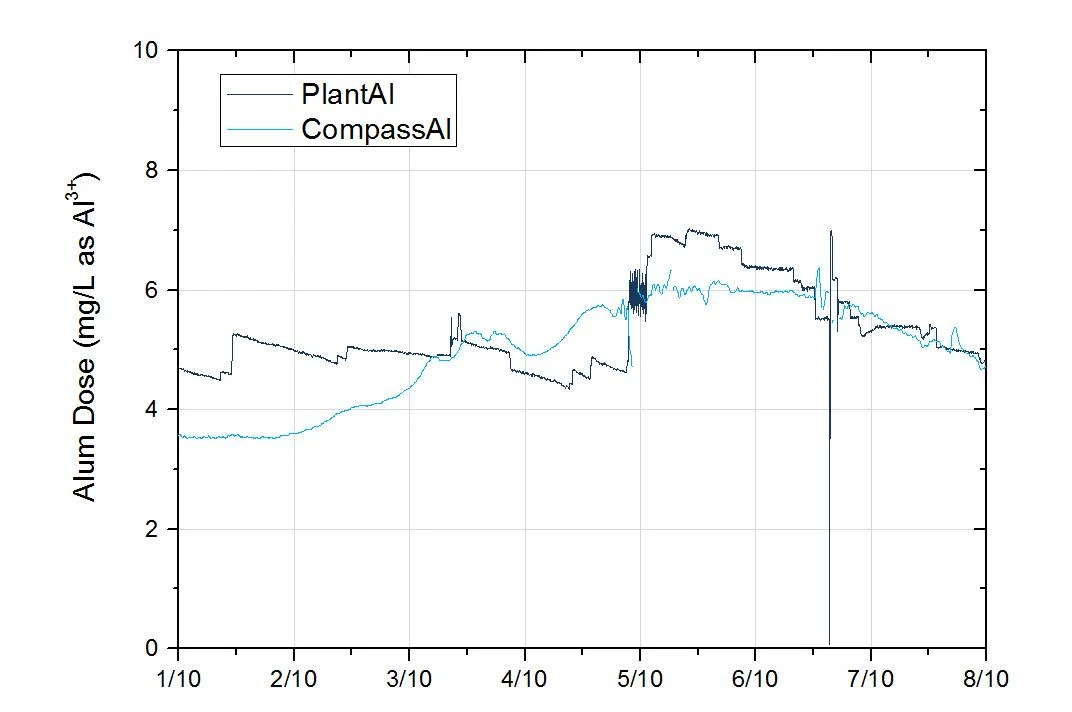
The published comparison shows Compass increasing its predicted alum dose progressively from 3 October, while the existing plant algorithm reacted later and more abruptly. This is historic evidence from one event, not a universal result.
What the graph shows
A progressive predicted adjustment
Compass began increasing its predicted dose before the main step change in the existing plant output. The case-study interpretation was that this earlier response could reduce abrupt changes and avoid periods of under- or over-dosing.
The graph does not by itself prove a guaranteed saving. It documents the dose comparison used during the trial.
Water-quality evidence
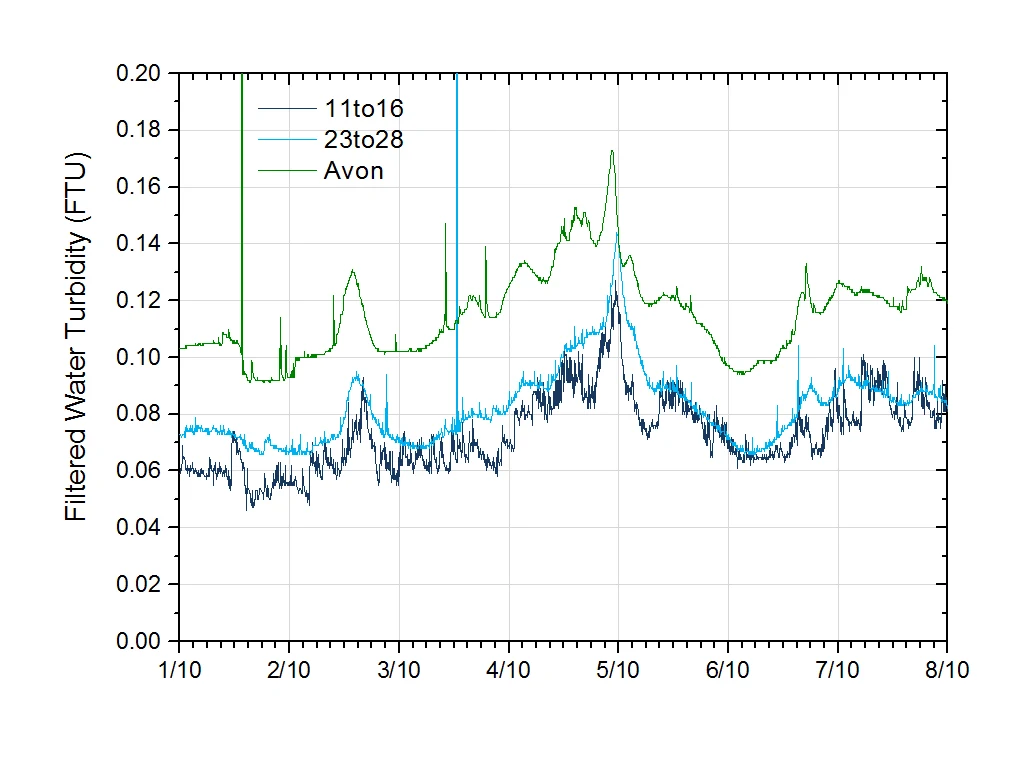
Filtered-water turbidity rose as the event developed
The original case study recorded filtered-water turbidity increasing on 4 October and peaking above 0.1 FTU on 5 October before returning towards the earlier steady state. Its published interpretation linked this to the slower response to changing raw-water conditions.
Interpretation boundary
Evidence must remain site-specific
This graph records the plant response during the trial period. It supports the case for investigating a faster control response, but it should not be read as proof that Compass alone determines finished-water quality.
Source conditions, coagulation chemistry, process condition, control limits and downstream treatment all affect the result.
Historic outcomes
What the trial team reported and predicted
Observed operating outcomes and modelled financial estimates are presented separately so the evidence is not overstated.
2013
Full automatic control
Following the trial and a period using the Compass recommendation online, the original record states that Mythe moved to full automated coagulation control in 2013.
£8k
Predicted winter saving
The historic assessment predicted an average coagulant saving of £8,000 over a six-month winter period. This was a modelled, site-specific estimate.
£60k+
Predicted summer opportunity
The assessment predicted more than £60,000 of coagulant savings over six summer months under a specified pH-control configuration. It was not a general performance guarantee.
Operational progression
From trial prediction to wider evaluation
The published record describes a staged route rather than an immediate move to unattended control.
01
Mythe validation
The site-specific model was developed over a one-year trial, compared against the existing strategy and then used to provide an online recommendation before full automatic control.
- Continuous source-water measurement
- Comparison with SCADA and laboratory data
- Predicted-dose assessment
- Operator review before automation
02
Additional sites
The original page records subsequent trials at Mitcheldean, Whitacre and Shelton, with installations completed across several Severn Trent sites during 2016–2017.
- Mitcheldean: 55 ML/day
- Whitacre: 43 ML/day
- Shelton: 36 ML/day
- Each application required its own evidence
Application lessons
What a modern Compass review should establish
The Mythe case study illustrates the value of linking measurement, model development, control integration and validation.
01
Source variability
Seasonal and event-driven changes that the control strategy must recognise.
02
Treatment objective
Turbidity, organics removal and the required operating envelope.
03
Current data
Laboratory, SCADA and online measurements suitable for model development.
04
Instrumentation
The current sensor generation, sample arrangement and maintenance plan.
05
Control limits
Dose boundaries, fallback modes, alarms and operator responsibilities.
06
Validation plan
Baseline, trial period, acceptance criteria and post-commissioning review.

Frequently Asked Questions
Important context for interpreting the Mythe case study and planning a current Compass application.
Was the £60,000 saving measured?
No. The original case-study assessment presented it as a predicted six-month summer opportunity under a specified pH-control configuration.
Did the trial use current Compass instrumentation?
No. The historic trial used s::can UV-Vis instrumentation. Current projects require PMA to confirm the applicable sensor and control arrangement.
What was directly observed?
The published record includes plant measurements, a comparison between the existing dose and the Compass prediction, and the later progression to online recommendation and automatic control.
Why is the 2013 date important?
It marks the historic move to full automatic control at Mythe. It should not be interpreted as a current specification or evidence that every site follows the same programme.
Can the Mythe result be applied to another works?
No result should be transferred directly. Source water, coagulant, treatment process, instrumentation, control limits and validation requirements are site-specific.
What does PMA need for an initial review?
Provide source-water and plant data, the treatment objective, coagulant and dose range, existing measurements, SCADA details and the desired validation approach.
Related technical guidance
Continue the Compass review
Use the current product overview for present-day application guidance, then explore related organics monitoring and wastewater control.
Drinking water
Automatic coagulation control
Review how current Compass applications combine measurement, site-specific modelling and control integration.
Organics monitoring
DOC and DBP formation-potential monitoring
Explore the relationship between online spectral measurement, organics removal and disinfection by-product risk.
Wastewater
Compass CPR and Compass CEP
See how the Compass family supports phosphorus removal and chemically enhanced wastewater pre-treatment.
PMA engineering support
From historic evidence to a current application review
Application review
Define the treatment objective
Start with source variability, coagulation chemistry, existing control and the outcome the works needs to manage.
Integration
Confirm the current system
Agree instrumentation, signals, limits, modes, alarms and responsibilities for the proposed installation.
Validation
Build the evidence at site
Compare operation against an agreed baseline and assess performance under representative conditions.
Discuss your application
Talk to PMA about automatic coagulation control
Tell us about the source water, treatment objective, existing measurements, coagulant, dose range and control-system arrangement. Our engineers can identify the information required for an initial Compass review.