
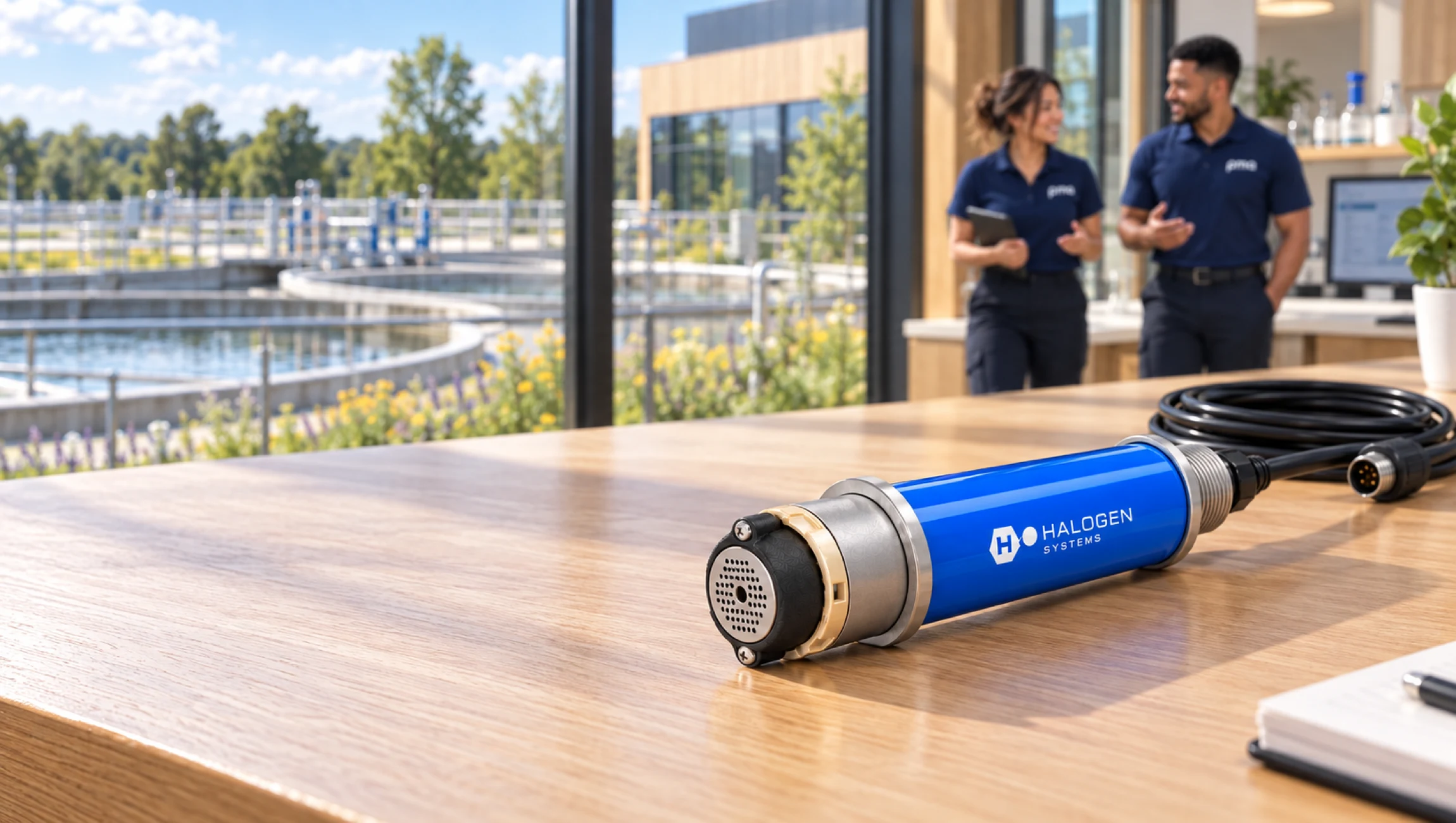
Halogen has issued new drinking-water compliance documentation for its MP5, MP6 and MP Total sensors. The October 2026 statement and technical note give UK water companies test report information to review when assessing direct monitoring under Regulation 31(4)(b), the small-surface-area route for equipment in contact with drinking water.
For PMA customers, the practical opportunity is to assess a self-cleaning sensor at the point where the measurement is needed. The documentation supports that engineering review alongside the water chemistry, mounting arrangement and operating requirements of the works.
What the new documentation covers
Halogen reports that all seven polymer wetted materials passed the relevant BS 6920 tests for cold drinking water. Six materials passed the full programme; the PPS/GF component passed the small-surface-area tests described in DWI Advice Sheet 8.
The manufacturer also states that complete MP-XXX sensors are certified to NSF/ANSI/CAN 61 and NSF/ANSI/CAN 372. These are distinct from the assessment needed for an intended installation under Regulation 31(4)(b). The reported test results concern the sensors; they should not be presented as certification of the D20 controller.
A documented route for water-contact assessment
DWI Advice Sheet 8 includes in-situ sensors and probes among its examples of small-surface-area products. The water supplier remains responsible for assessing the intended use, including the water-contact materials and whether the product could adversely affect water quality. Equipment used outside its normal scope needs its own review.
Measure in the process
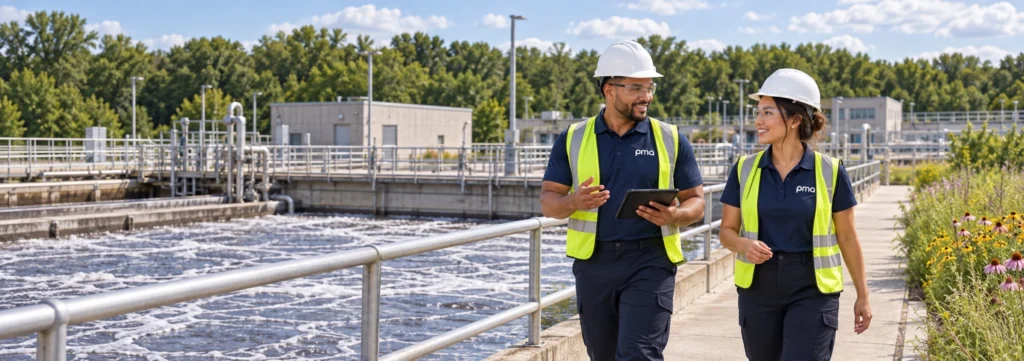
In a suitable direct-insertion or immersion arrangement, the sensor measures in the process itself. This removes the transport lag of a separate pumped sample line and avoids continuously discharging that sample stream to waste. Confirm the sensor variant, pressure, mounting and safe access before selecting the arrangement.

Turn the signal into an operating decision
Chlorine, pH, ORP, conductivity and temperature provide complementary process information. A direct reading can help operators investigate a changing trend without first having to account for the travel time of a separate sample line. Sensor response and the behaviour of the full measurement system still need to be understood.
Direct monitoring can support Regulation 26 disinfection and water-quality shutdown arrangements. Alarm settings, signal availability and the complete shutdown sequence must be validated for the individual works. A sensor alone does not establish compliance with the treatment system’s duties.
Review the proposed installation with PMA
- Identify the residual to follow: free chlorine, total chlorine or monochloramine, and the appropriate sensor.
- Define the process point, mounting arrangement, normal water chemistry, pressure and temperature.
- Plan representative reference checks, calibration, maintenance and safe removal access.
- Agree the controller signals, alarm response and records the operating team needs.
PMA can help bring the test report information, sensor selection and operating workflow together. The MP5, MP6 and MP Total have different measurement roles; the compatible D20 provides local display and site interfaces. Start with the application rather than assuming every sensor configuration is interchangeable.
Read the test reports
The manufacturer’s wetted-materials compliance statement and Regulation 31 technical note are available for technical review. Read them alongside DWI Advice Sheet 8 and the current product guidance.
These documents are not DWI Regulation 31 product approval or WRAS product approval. Use under Regulation 31(4)(b) remains subject to the water supplier’s assessment and the intended installation. The regulation references here concern England and Wales; requirements and numbering differ across UK jurisdictions.