Free chlorine
0–20 ppm; 0.001 ppm resolution. The guide states a 0.01 ppm detection limit and 0.04 ppm quantitation limit.


Blue self-cleaning, reagentless free-chlorine monitoring for defined water-quality points.
MP5 measures free chlorine using a reagentless, three-electrode system. The integrated pH, ORP, conductivity and temperature information helps your team review the water conditions alongside the residual.
Continuous mechanical and electrochemical cleaning keeps the measuring surfaces working, with no membrane or electrolyte replacement. Use D20 for a local display and site outputs, or discuss an appropriate PLC integration.
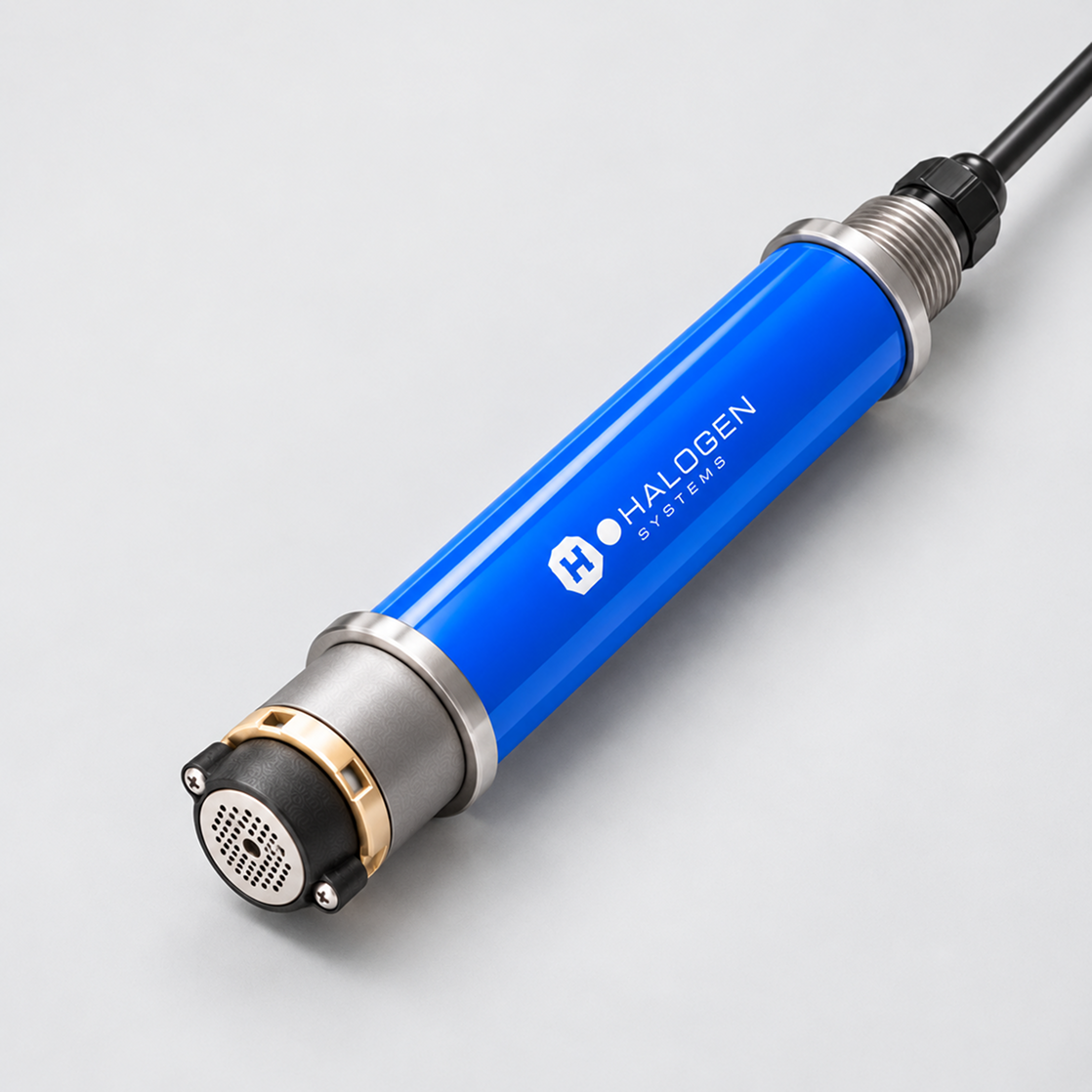
A small motor drives a magnetically coupled impeller. Its movement circulates water at the sensing end and agitates cleaning beads across the measuring surfaces.
The beads help keep the electrodes and pH element clean while the sensor works. Electrochemical cleaning supports the mechanical action. There are no analysis reagents to replenish and no sensing membrane or electrolyte to replace.
This local movement supports measurement at low bulk-flow velocities. The sensor still needs representative water, a suitable installation and planned reference checks.
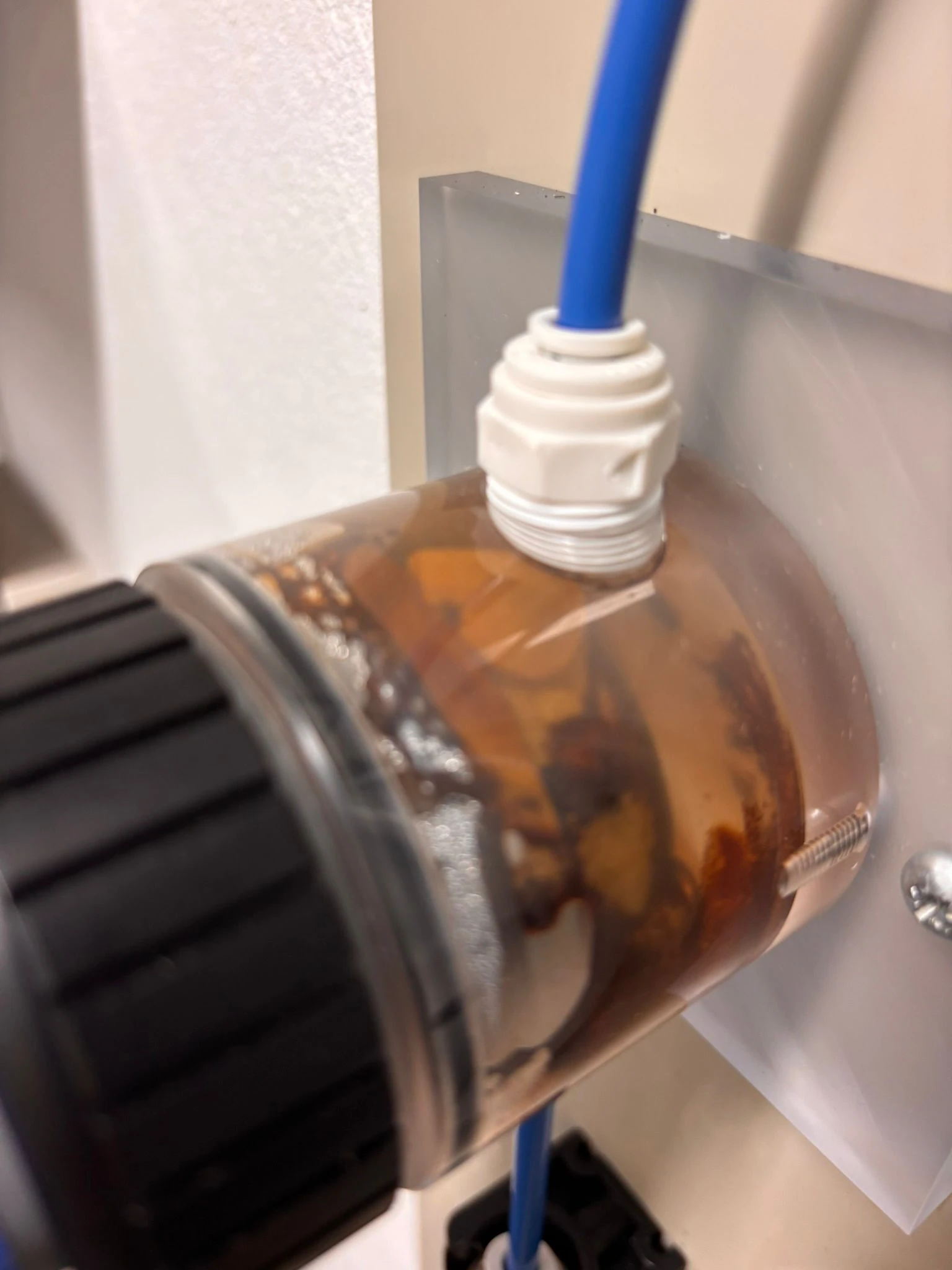
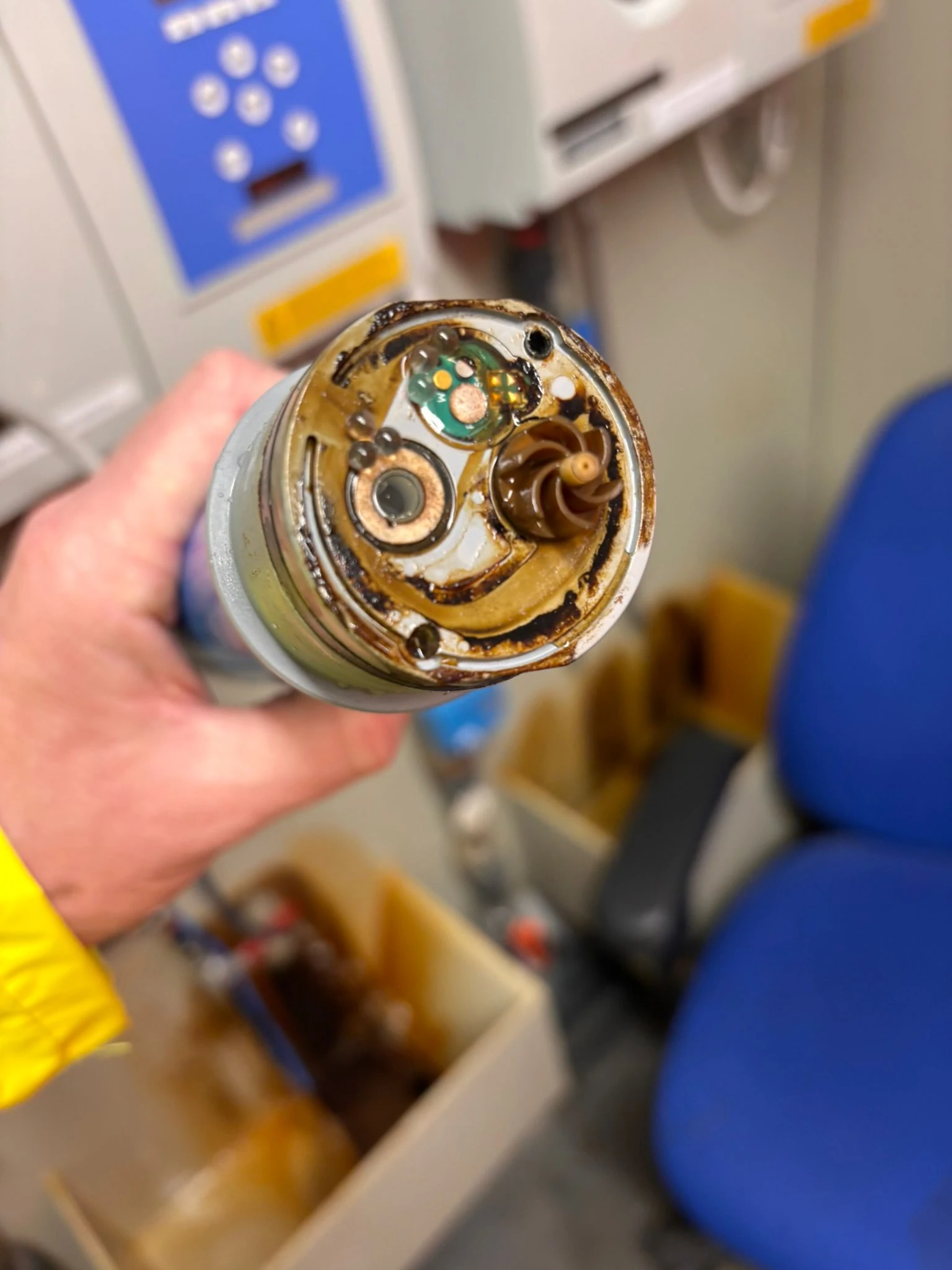
Iron-rich water can leave heavy deposits on a sensor. Halogen’s continuous self-cleaning helps keep the measuring surfaces working, reducing routine cleaning in challenging conditions.
These photographs show an MP5 after five months in high-iron borehole water, without cleaning, recalibration or other intervention during the published trial.
Discuss your application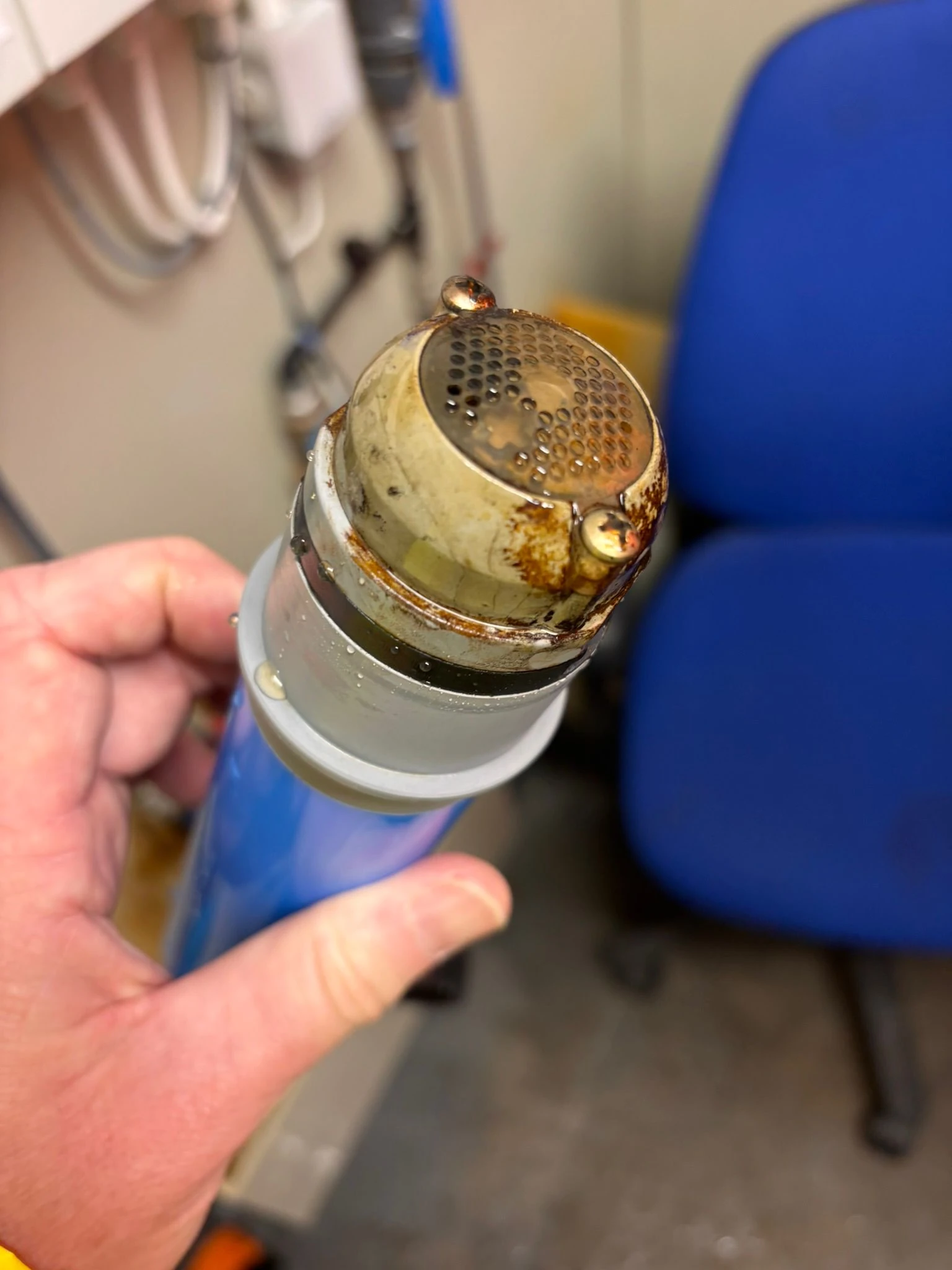
Values from the supplied MP5 product guide. Select the exact sensor variant and mounting arrangement with PMA.
0–20 ppm; 0.001 ppm resolution. The guide states a 0.01 ppm detection limit and 0.04 ppm quantitation limit.
A nominal 60-second measurement interval. Allow for commissioning, reference checks and site signal handling.
Chlorine sample pH 6.5–9.0. Published conductivity range 50–10,000 µS. Confirm the water matrix and conductivity basis.
1–55°C sample temperature and a published 10 bar pressure limit, subject to the complete installation rating.
24 V DC ±10%; 50 mA operating consumption with 200 mA maximum startup. Account for cabling and power provision.
Typical six-month calibration stability. The guide requires checks at least every six months; assess local reference-check needs.
Explore installation options and plan an MP5 monitoring point on our dedicated chlorine monitoring website.
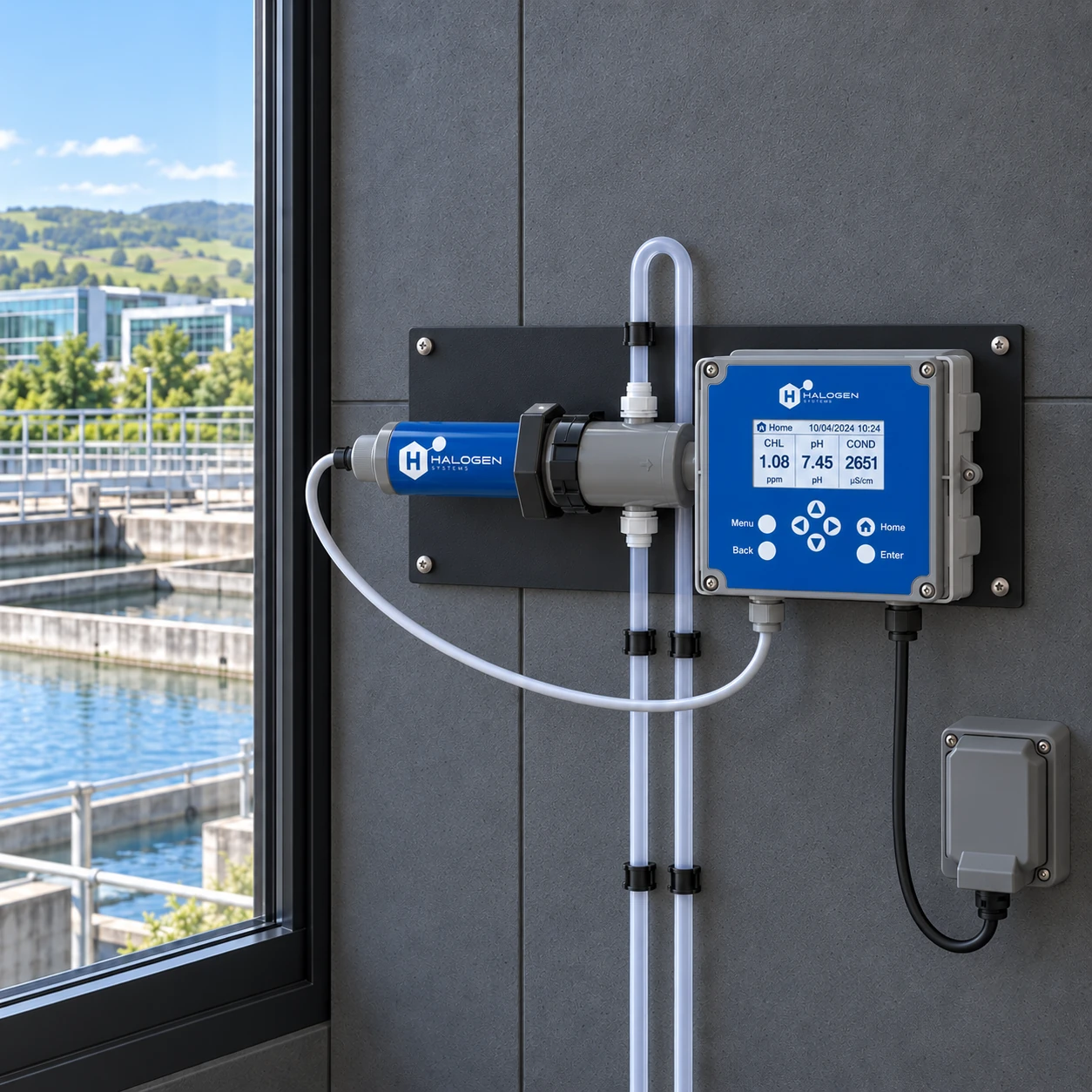
At a works, decide whether the reading is intended to describe a particular treated-water outlet, a blend or another process point. At a reservoir, relate it to the inlet, outlet or immersed location.
Choose a flow cell, in-pipe fitting or immersion arrangement that suits the sensor variant. Include isolation, drainage, sample transit time and maintenance access in the site review.
Practical guidance for choosing the monitoring point and using the resulting trend.
Follow a defined treated-water point, reference checks and signal quality.
Connect residual trends to inlet, outlet and storage operating conditions.
Keep monochloramine and free-chlorine trends in a clear investigation record.
Read the manufacturer product guides for installation, operation, calibration and model-specific limits.
The supplied MP5 guide uses the MP5A model designation. PMA presents this model as MP5.
Operating modes, reference calibration, installation requirements and technical specifications.
No. The guide gives condition-dependent accuracy relative to a calibrated DPD reference, including pH, temperature, conductivity and flow changes. Use its complete specification for your expected water conditions.
MP5 is presented here for free chlorine. For monochloramine and free chlorine in suitable chloraminated water, review MP6 with PMA.
Send the expected free-chlorine range, pH, conductivity, sample temperature and pressure, monitoring point, power and required outputs. Include site photographs or a process sketch where available.
PMA connects the measurement, installation and operating team. We help you review the application, select suitable instrumentation and plan commissioning, training and ongoing service.
Speak to the PMA team about your instruments, reagents or service requirements. Tell us what you need, and we’ll help you find the right next step.
Trusted by our clients


Share your requirements below. All fields are required.
Your enquiry goes directly to our team. Your details are used to respond to you, and you won’t be added to a marketing database. Read our privacy policy.
To find out more about our range of sensors, request a callback or ask a technical question, our expert staff are always on hand. Our focus has always been to deliver world-class customer service.
Get startedWe use optional Google Analytics cookies to understand which pages are useful. Analytics stays off unless you accept. Read our privacy statement.