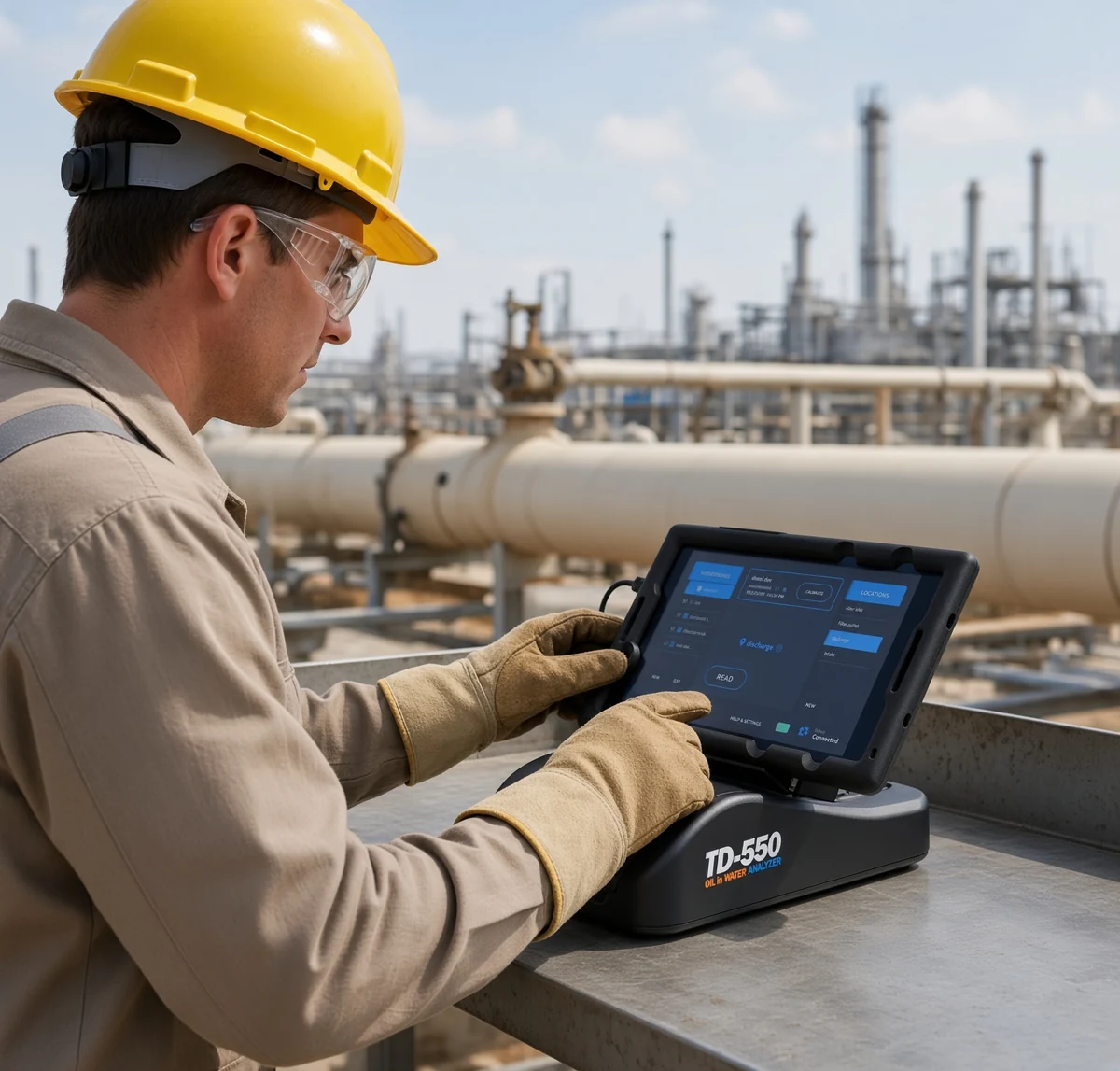
TD-550 portable analyser
Grab-sample oil analysis for crude and heavier oils. Review target-oil calibration, sample preparation and recorded results.


Portable oil analysis, continuous hydrocarbon monitoring and chlorophyll-A measurement. Find the right instrument with PMA support.
Oil contamination can threaten an intake, a cooling circuit, a boiler or a treatment process. A useful measurement starts with the hydrocarbon you need to detect, the water matrix and the decision the result will support.
PMA supplies Turner Designs Hydrocarbon Instruments for portable grab-sample analysis and continuous online oil-in-water monitoring. The TD-550, TD-560 and TD-120 use fluorescence to measure a response from suitable target hydrocarbons. The separate CF-200 measures chlorophyll A to support algae-bloom monitoring.
Use the portable analysers for discrete samples and investigation. Choose the TD-120 when a continuous trend and an alarm are needed. Use the CF-200 when the question concerns algae and intake-water quality.
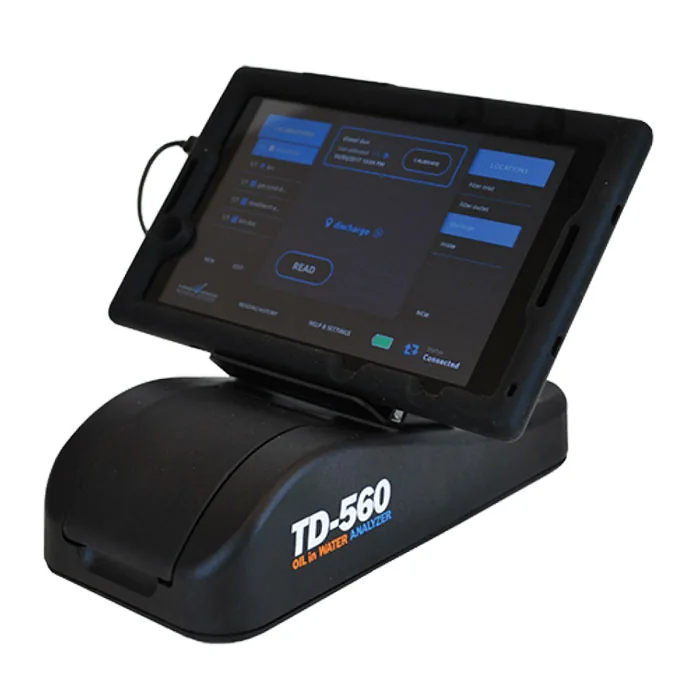
Choose by measurement and operating mode. The CF-200 has its own water-quality role; it does not measure oil.
Grab-sample oil analysis for crude and heavier oils. Review target-oil calibration, sample preparation and recorded results.
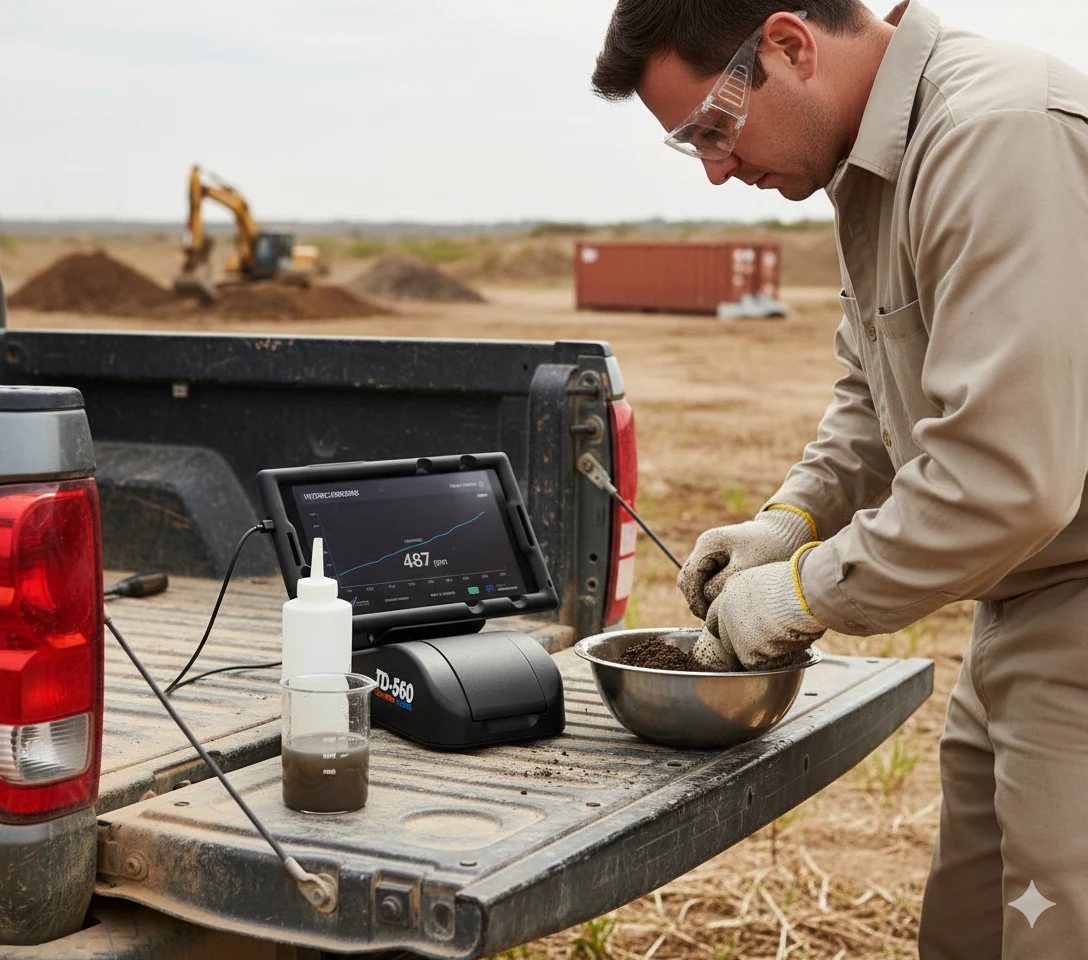
Portable analysis with a second optical channel for lighter hydrocarbons as well as the oils measured by the TD-550.
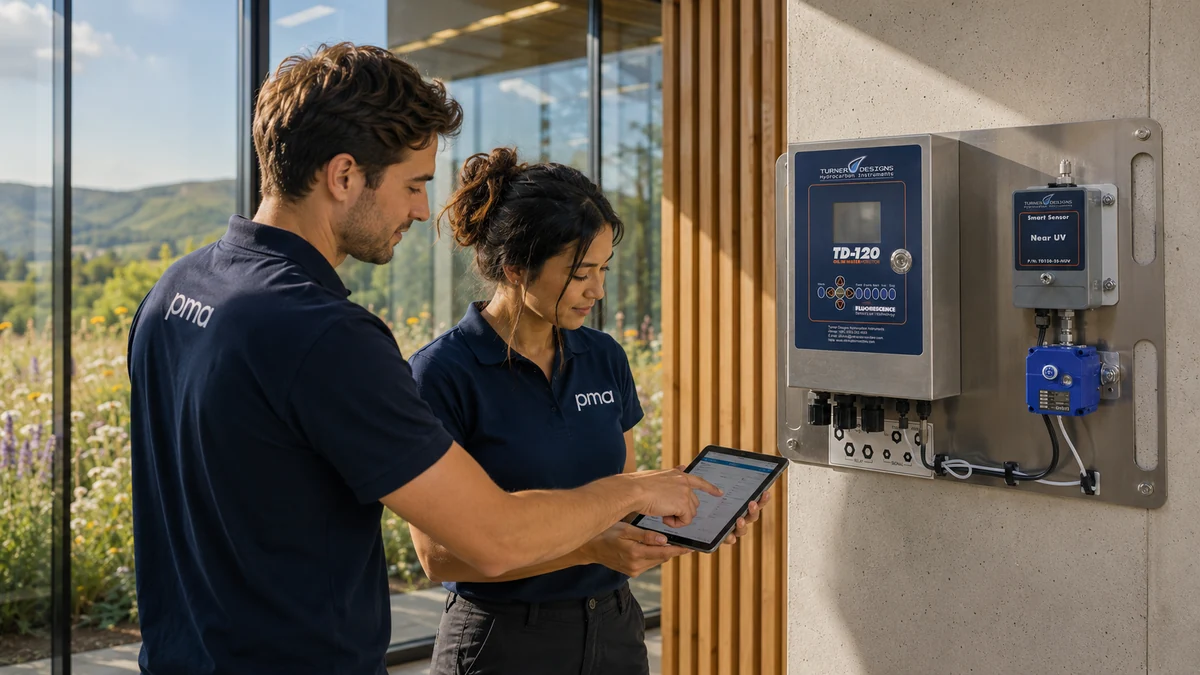
Continuous UV fluorescence measurement for oil contamination, process protection and treatment monitoring.
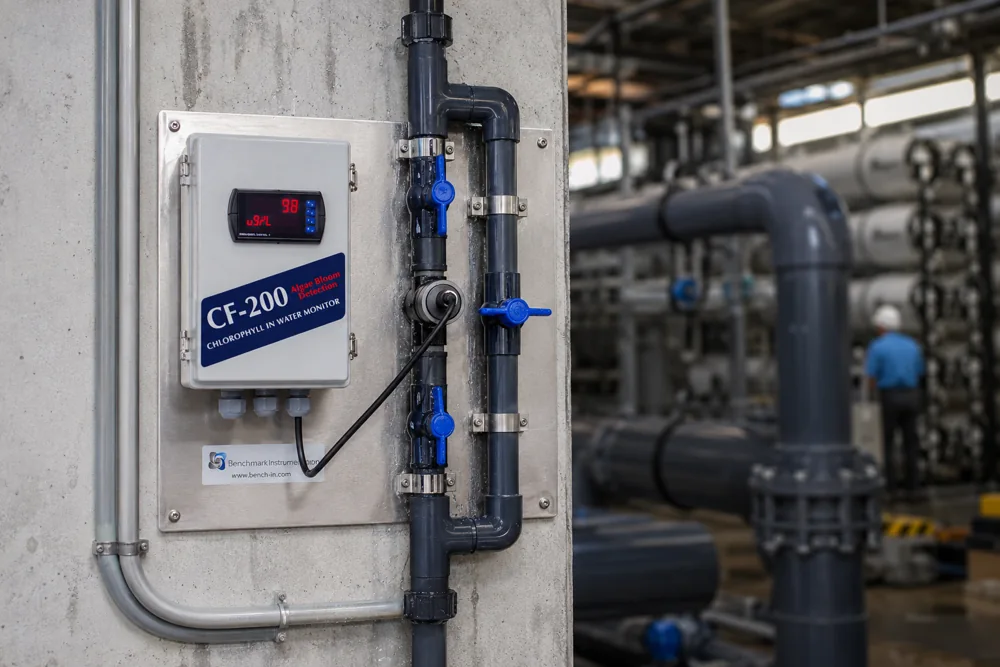
Continuous chlorophyll-A fluorescence measurement for algae-bloom warning and water-intake protection.
The TD-550 and TD-560 support grab-sample testing, saved calibrations, timestamped results and data review. Select the optical channel and preparation method around the oil in your sample.
A single optical channel is suited to crude oil, diesel, lubrication oils and fuel oils. It is a practical starting point when these are the defined targets.
The TD-560 adds a second optical channel for lighter hydrocarbons, including BTEX, gas condensates, gasoline, jet fuel and kerosene, alongside the TD-550 oil targets.
The published 5 ppb–5000 ppm detection range depends on the target oil. Both models support popular extraction solvents and TDHI’s No-Solvent Method where appropriate. The preparation method and calibration must be validated for the sample and required reporting basis.
The TD-120 provides a continuous UV fluorescence signal, configurable alarms and an isolated 4–20 mA output. It supports duties such as cooling-water leak detection, steam-condensate monitoring, boiler-feed protection and process optimisation.
The CF-200 combines a C-Fluor fluorescence probe with a bypass assembly, display and transmitter. It provides a chlorophyll-A trend in fresh or sea water for algae-related intake and treatment decisions.
Representative sampling, sample transport, flow, cleaning access, signal integration and the alarm response all affect a useful installation. Review these alongside the instrument specification.
Do you need an early indication of a leaking process fluid? Define the target oil, normal background and required alarm response.
Review contamination risk before condensate is returned to the process. Check sample cooling, flow and the applicable instrument limits.
Use portable sample analysis for investigation and treatment checks; assess online monitoring where continuous information adds value.
Discuss the hydrocarbon target, water variability and reporting method. An operational fluorescence result needs a defined calibration and interpretation.
Portable analysers can support discrete sample screening and source investigation when paired with an appropriate preparation method.
Use chlorophyll-A trends to recognise changing algae-related conditions at an intake or pretreatment stage. Agree site-specific alarm criteria.
Fluorescence is sensitive to compounds that absorb excitation light and emit light at another wavelength. Oil composition, the selected optical channel and the sample background influence the response. A calibration established for one oil does not automatically describe every hydrocarbon mixture.
For portable analysis, sampling and extraction or a suitable no-solvent procedure are part of the measurement. For an online monitor, include the transport delay and sample conditioning when assessing the complete response time.
If results will support a discharge or other compliance decision, agree the required reference method and demonstrate the relationship using representative samples. Fluorescence measurements are not automatically interchangeable with every laboratory oil-and-grease or total-hydrocarbon method.

PMA has supported process measurement and analysis since 1971. We bring the instrument and its application together: the sample, the measurement method, the operating environment and the information your team needs.
Share your target oil or chlorophyll-A duty, expected concentrations and site conditions. Our team can help review product selection, calibration, installation requirements and ongoing service.
Read the existing PMA introduction to the TD-120 and its process-monitoring role.
Explore the existing PMA article on raw-water intake protection and UV fluorescence.
Read PMA’s existing article about oil contamination and cooling-water monitoring.
Continue to PMA’s existing UV fluorescence and solvent-free extraction articles.
Choose portable analysis for discrete samples and investigations. Choose an online monitor for a continuous trend and configured alarm. The right choice depends on the sample, the target and how the result will be used.
No. The CF-200 measures chlorophyll A using fluorescence. It has a separate role in algae-bloom monitoring and water-intake protection.
Describe the target substance, expected concentration, water matrix, sample temperature, flow or sampling routine, reporting method and desired alarm or data integration. Include installation details for an online system.
Speak to the PMA team about your instruments, reagents or service requirements. Tell us what you need, and we’ll help you find the right next step.
Share your requirements below. All fields are required.
Your enquiry goes directly to our team. Your details are used to respond to you, and you won’t be added to a marketing database. Read our privacy policy.
To find out more about our range of sensors, request a callback or ask a technical question, our expert staff are always on hand. Our focus has always been to deliver world-class customer service.
Get startedWe use optional Google Analytics cookies to understand which pages are useful. Analytics stays off unless you accept. Read our privacy statement.