Suspended solids & SVI analysis.Discover S3A
PMA colleagues at an industrial water facility

Refinery stream checks

Link a combined wastewater trend to named contributing streams and a traceable investigation record.

A common outlet does not identify the source

A monitor on combined refinery wastewater describes the mixture reaching that point. It does not identify which contributing stream changed. Build the investigation around a dated source map and known operating connections, then link the common trend to targeted upstream observations.

Use the TD-120 for an appropriate continuous monitoring point and review portable TD-550 or TD-560 analysis for collected samples. Model and channel selection depend on the target oil or lighter hydrocarbon; a fluorescence result is not identification of individual BTEX compounds.

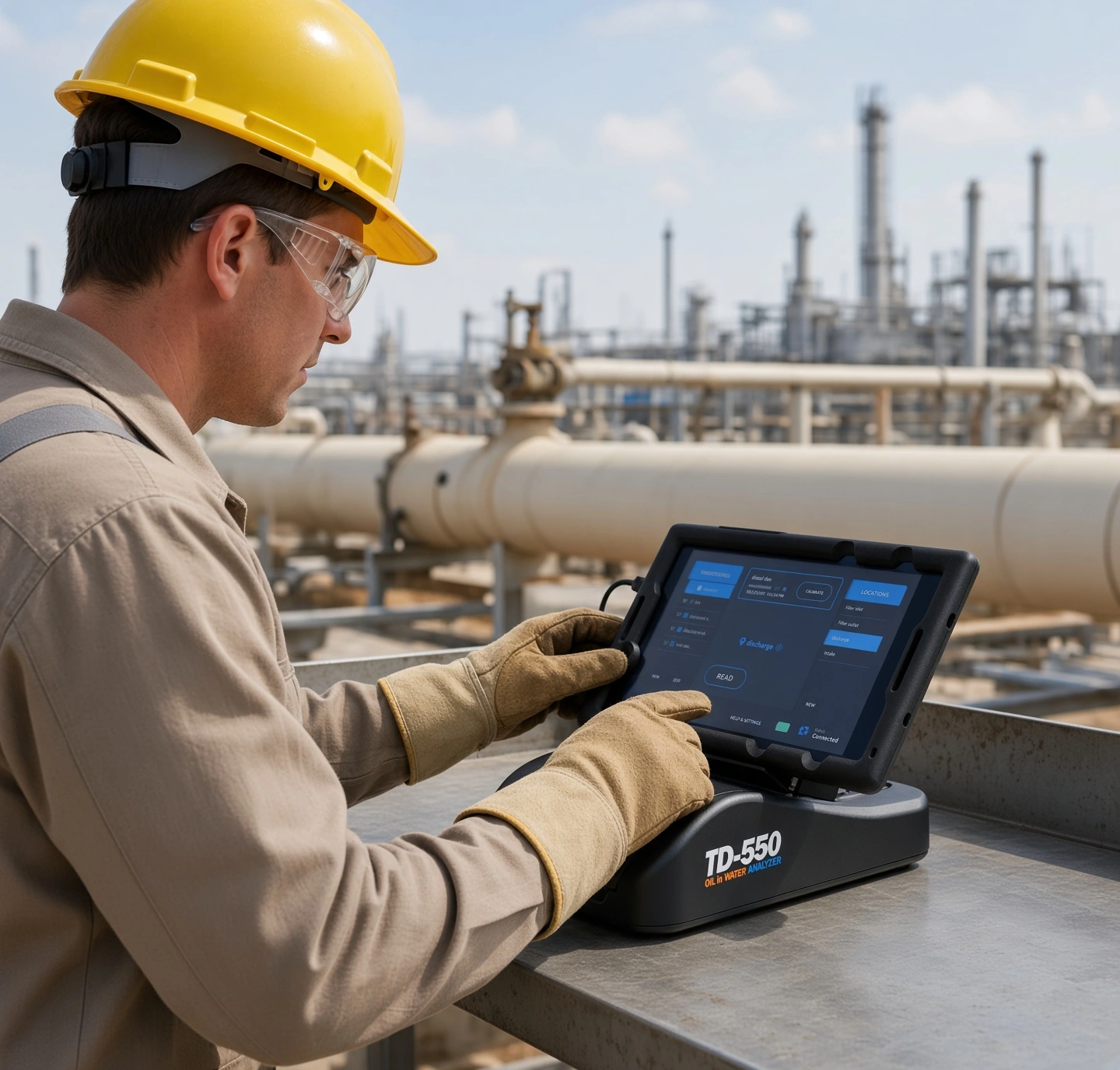
Technician using a Turner TD-550 portable analyser at a refinery

Build a source-mapping record

The useful record distinguishes what was connected, what was actually sampled and what remains a possible explanation.

Date the source map

List the process and drainage streams feeding the common point during the investigation. Record available valve, diversion and maintenance-log references. Retain the map version so later route changes do not alter the meaning of the earlier record.

State the suspected change

Name the process fluid or mixture being considered and the evidence for considering it. Separate an observed upstream change from a suspected source. Retain relevant process-event times without treating timing alone as proof of a connection.

Give every sample a route

Assign each sample an ID, location, collection time and handling record. Link it to the stream map and operating state. Describe how the selected points answer the investigation question; a single upstream sample need not represent the whole event.

Close the source assessment

Record confirmed findings, alternative explanations and gaps such as unsampled streams or uncertain mixing times. Name the next investigation action and its owner. Keep the original trend, route map and results together for handover.

Keep source attribution within the evidence

A larger upstream reading does not by itself prove that stream caused the common-outlet event. Consider which streams were connected, whether the sampling windows overlap meaningfully and whether the measurements share a suitable basis. Missing route or timing evidence should remain visible in the conclusion.

Where the hydrocarbon mixture changes, review the optical response and calibration with PMA. Preserve the site’s required laboratory method for compound-specific or formal discharge reporting; an operational fluorescence reading does not automatically replace it.

Select the instrument around the task

Confirm the target fluid, water matrix and measurement purpose with PMA before specifying the model. Preserve the site’s sampling, analysis and operating procedures.

TD-120 online monitor

Continuous monitoring of a suitable hydrocarbon target at a defined process point.

View TD-120

TD-550 portable analyser

Collected-sample analysis for suitable crude and heavier-oil targets, using the selected preparation and calibration.

View TD-550

TD-560 portable analyser

A second optical channel supports review of lighter hydrocarbon targets alongside the TD-550 channel.

View TD-560

Looking after your world since 1971

PMA connects the measurement, installation and operating team. We help you review the application, select suitable instrumentation and plan commissioning, training and ongoing service.

Prepare an application brief

Send PMA the wastewater source map, normal and changing stream connections, suspected oil or fluid targets and proposed sampling locations. Include water-matrix information, available operating records and the investigation or reporting decision the measurements need to support.

Related operating guidance

Let’s talk about your application.

Speak to the PMA team about your instruments, reagents or service requirements. Tell us what you need, and we’ll help you find the right next step.

  • Advice for your application. Find the right instruments, sensors and chemical reagents for your process.
  • Practical service support. Discuss commissioning, calibration, maintenance or an instrument issue with our team.
  • Clear next steps. Ask a technical question or request a callback, with your site and measurements in mind.
  • An enquiry, not a mailing list. Your details are used to respond to you. You won’t be added to a marketing database.

Trusted by our clients

Prefer to speak with us?

Call 01484 843 708

You can also email [email protected].

Tell us how we can help

Share your requirements below. All fields are required.


Your enquiry goes directly to our team. Your details are used to respond to you, and you won’t be added to a marketing database. Read our privacy policy.