Name the connected returns
List the exchangers and other returns feeding the proposed point. Mark separate loops, bypasses and alternative operating routes. Record which equipment can operate without its return reaching the monitor.



Give a return-header trend a clear circuit map and a practical operating-state record.
An individual exchanger return and a combined cooling-water header answer different questions. Draw the normal and alternative flow routes before placing the monitor. The reading can only represent water that reaches that point under the operating arrangement recorded.
The TD-120 can be reviewed for continuous fluorescence monitoring of a suitable target fluid. TD-550 or TD-560 portable analysis may support investigation at selected points. Confirm the response to the fluid that could enter the cooling water, rather than selecting solely by the cooling-water label.
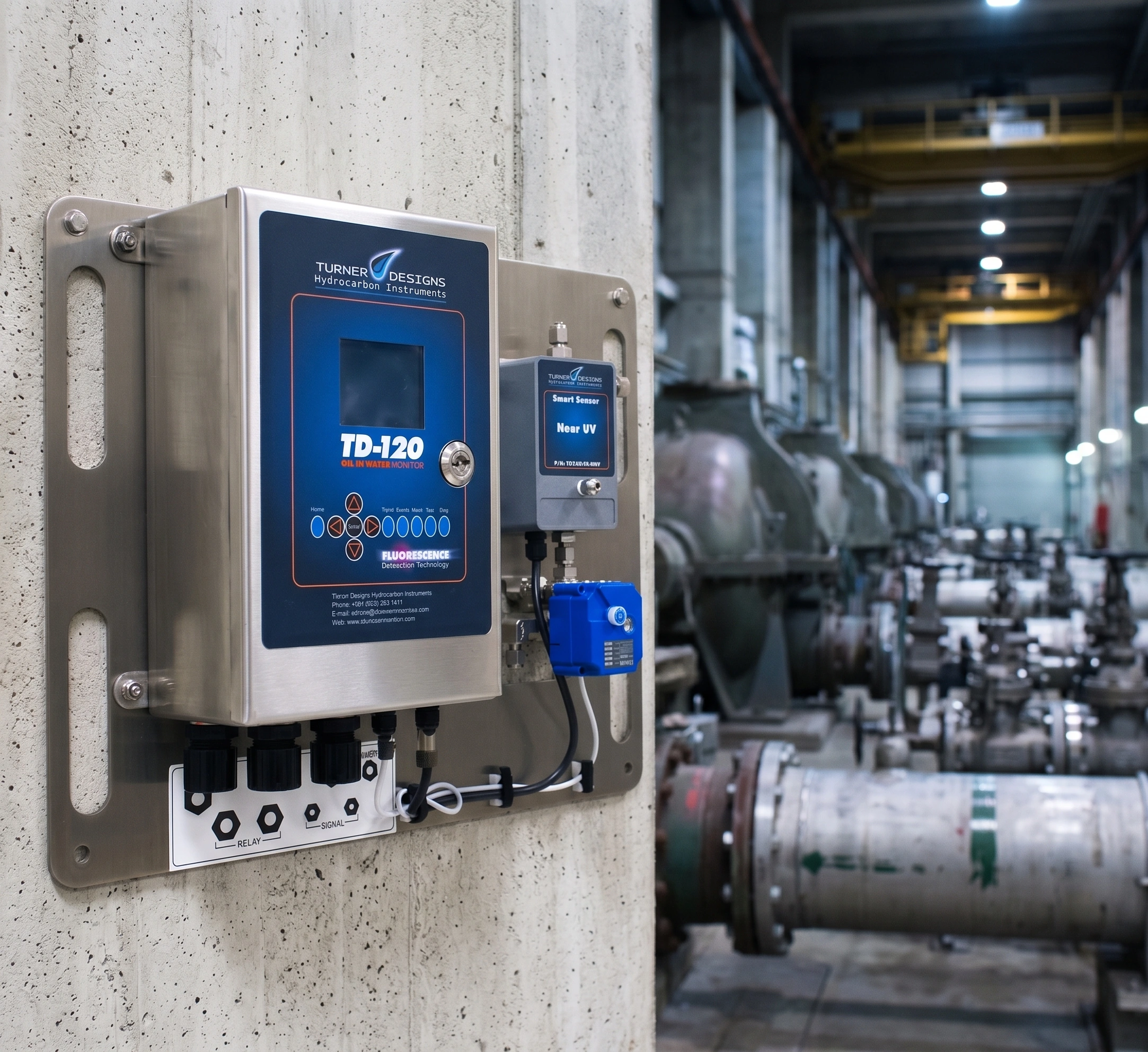
Use the map to describe coverage and investigation options, not as a promise that one monitor can locate every leak.
List the exchangers and other returns feeding the proposed point. Mark separate loops, bypasses and alternative operating routes. Record which equipment can operate without its return reaching the monitor.
Record where streams combine and the available flow or timing information. Include sample-line transport separately from travel around the cooling loop. Dilution and transport can change the signal observed at a common header.
Link the trend to the equipment in service, the valve or route configuration and relevant process-fluid changes. Keep a dated map or operating-log reference. A trend recorded under one configuration need not have the same coverage after a route change.
Identify suitable upstream investigation points and the site’s responsible operator. Record how a common-header event will be followed using plant information and selected samples. Apply the site’s agreed operating response; this map does not authorise isolation or switching actions.
A common-header monitor can indicate a change in its combined stream without identifying the exchanger involved. It also cannot demonstrate that an unconnected return was clear. Make those boundaries explicit when handing over the monitoring arrangement.
Keep the expected background, target-fluid response, sample delivery and response time in the application assessment. Neither a low reading nor a short sensor response specification guarantees that a leak is absent or that the complete installation will protect equipment.
Confirm the target fluid, water matrix and measurement purpose with PMA before specifying the model. Preserve the site’s sampling, analysis and operating procedures.
Continuous monitoring of a suitable hydrocarbon target at a defined process point.
Collected-sample analysis for suitable crude and heavier-oil targets, using the selected preparation and calibration.
A second optical channel supports review of lighter hydrocarbon targets alongside the TD-550 channel.
PMA connects the measurement, installation and operating team. We help you review the application, select suitable instrumentation and plan commissioning, training and ongoing service.
Send PMA a cooling-circuit sketch, the connected process fluids, proposed take-off and alternative operating routes. Include sample-line length, expected flow and conditions, existing investigation points and the intended alarm or monitoring-system connection.
Speak to the PMA team about your instruments, reagents or service requirements. Tell us what you need, and we’ll help you find the right next step.
Trusted by our clients


Share your requirements below. All fields are required.
Your enquiry goes directly to our team. Your details are used to respond to you, and you won’t be added to a marketing database. Read our privacy policy.
To find out more about our range of sensors, request a callback or ask a technical question, our expert staff are always on hand. Our focus has always been to deliver world-class customer service.
Get startedWe use optional Google Analytics cookies to understand which pages are useful. Analytics stays off unless you accept. Read our privacy statement.